
For anyone entrusted with the care and education of young children, you know the feeling. You walk into a space—be it a new classroom you’re setting up or an existing one you’re refreshing—and you’re met with a sea of catalogs, a budget, and a profound question: Where do I even begin? The choices can be overwhelming. Do you prioritize bright colors? The most durable plastic? The cutest themed sets?
At Hikeylove, we invite you to pause and ask a different, more foundational question first: What do I want this environment to teach?
We operate on a core belief, championed by leading global pedagogies like Reggio Emilia: The environment is the "third teacher." It is a silent, constant, and powerful force that shapes behavior, nurtures (or hinders) emotional well-being, and either supports or contradicts your educational goals. The furniture you choose is not merely equipment; it is the physical curriculum of space, autonomy, and discovery.
This article explores how modern early childhood classroom design trends are moving beyond simple functionality. We'll connect the dots between educational theory and practical application, offering a framework that aligns with tools like the ECERS (Early Childhood Environment Rating Scale) and helps you create truly impactful, play-based learning environments.
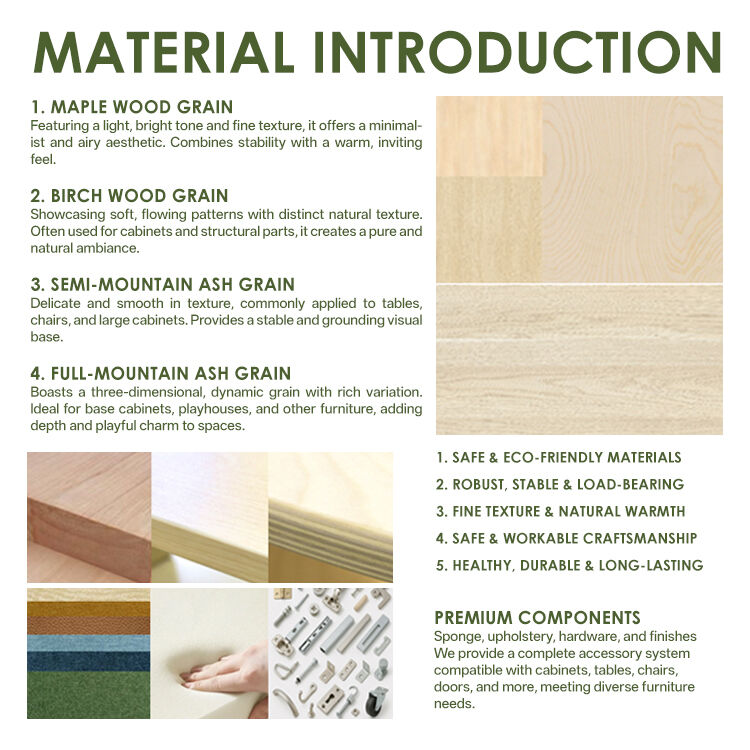
One of the most significant shifts we see is a move away from synthetic, uniform materials toward those that tell a story of the natural world. This isn’t just an aesthetic trend; it’s a developmental imperative.
The Cognitive Benefits of Natural Classroom Materials: A smooth, cool piece of sanded beechwood, the flexible give of a rattan weave, the soft texture of organic cotton—these materials provide rich, varied sensory input. They have warmth, weight, and imperfections that teach discernment. When a child stacks wooden blocks, they are learning physics, geometry, and patience through a material that responds with authentic feedback. This connection to sustainable preschool design principles fosters an early, embodied understanding of ecology and stewardship. Our collections, utilizing solid woods, water-based finishes, and woven naturals, are built on this principle that the material itself is a teacher of authenticity, sensory integration, and respect for our planet.
The static classroom of yesterday, with fixed desks in rows, is designed for one thing: passive reception. The dynamic classrooms of today are designed for active, play-based learning.
The Critical Importance of Flexible Seating and Layout: True learning agency begins with the freedom to move and choose. Flexible seating—lightweight stools, movable cushions, adjustable-height tables—empowers children to listen to their bodies. Can they focus better sitting on a low stool, kneeling, or standing? This autonomy builds self-regulation. Furthermore, our modular furniture systems allow a space to transform in minutes: a cluster of tables for collaborative project work, an open floor for group time, or small nooks for individual exploration. This agility is less about a "trend" and more about honoring the natural, kinetic energy of childhood and facilitating diverse social interactions. It’s a direct answer to classroom organization tips that prioritize flow and minimize disruptive transitions.
Meeting and exceeding safety standards (GB, EN71, ASTM) is our absolute baseline—the non-negotiable table stakes. But at Hikeylove, we think about safety in a broader, more holistic sense: psychological safety and inclusive design.
Creating Inclusive Classrooms Through Physical Design: Inclusivity means every child can access, use, and feel ownership over their environment. It means tables with easy-to-adjust legs to accommodate different heights and abilities. It means furniture with soft, rounded edges that protect not just from physical bumps but also create a visually welcoming, non-threatening atmosphere. It means having quiet, semi-enclosed retreats (like our Woven Nook) within the classroom for children who are over-stimulated, offering a "soft harbor" for self-regulation. This thoughtful approach directly supports higher ECERS rating scores in areas related to space, furnishings, and meeting the needs of all children. When you choose furniture with this depth of consideration, you’re building a kindergarten furniture buying guide checklist that looks beyond price and durability to well-being and access.
Our product philosophy is the practical application of these insights. We don’t just sell furniture; we provide the component parts for building your "third teacher."
Our Art Zone System, with its "Visible, Accessible & Classifiable" storage, teaches order, independence, and responsibility, turning clean-up into a logical part of the creative process.
Our 6-Person Adjustable Tables grow physically with the children and adapt pedagogically to the activity, embodying long-term value and flexibility.
Our Modular Reading Groves and calming nooks create intentional zones for focus and retreat, answering the brain’s need for moments of quiet amidst social stimulation.
Choosing furniture for an early learning space is one of the most tangible investments you will make in your educational philosophy. It is a decision that speaks daily to the children in your care, telling them what they are worth, what they are capable of, and how they are expected to engage with the world.
Let’s move beyond filling a room. Let’s design an ecosystem for growth.
Ready to deepen the conversation? Explore our curated collections that translate these principles into practice, or download our comprehensive guide, "Designing the Third Teacher: A Framework for Intentional Early Childhood Spaces."

Leading Chinese brand for 20+ years, supplying eco-safe, design-driven kindergarten furniture & turnkey space solutions to 10,000+ preschools worldwide.
No. 26 Gongye Avenue, Shunjing Industrial Park, Banfu Town, Zhongshan City, Guangdong Province
Copyright © 2026 Zhongshan Haijilun Cultural And Educational Product Co., Ltd.. All rights reserved. Privacy Policy