
For far too long, the conversation around early childhood furniture has begun and ended with safety and durability. These are, and will always be, our non-negotiable foundations. But at Hikeylove, we start with a more profound question: What if the environment itself could teach?
We are witnessing a paradigm shift in early education. Progressive classrooms in China, Japan, and around the globe are moving beyond the model of a static container for children and activities. Instead, architects and educators are co-creating spaces that act as a dynamic "third teacher" — an environment that independently encourages exploration, collaboration, and discovery. This is not just an architectural trend; it is an educational philosophy made physical.
This article explores how the very elements of a classroom—its layout, furniture, and materials—can be intentionally designed to support modern pedagogical goals. We will move past simple procurement checklists and delve into how thoughtful design choices directly impact children's cognitive engagement, emotional well-being, and innate drive to learn.
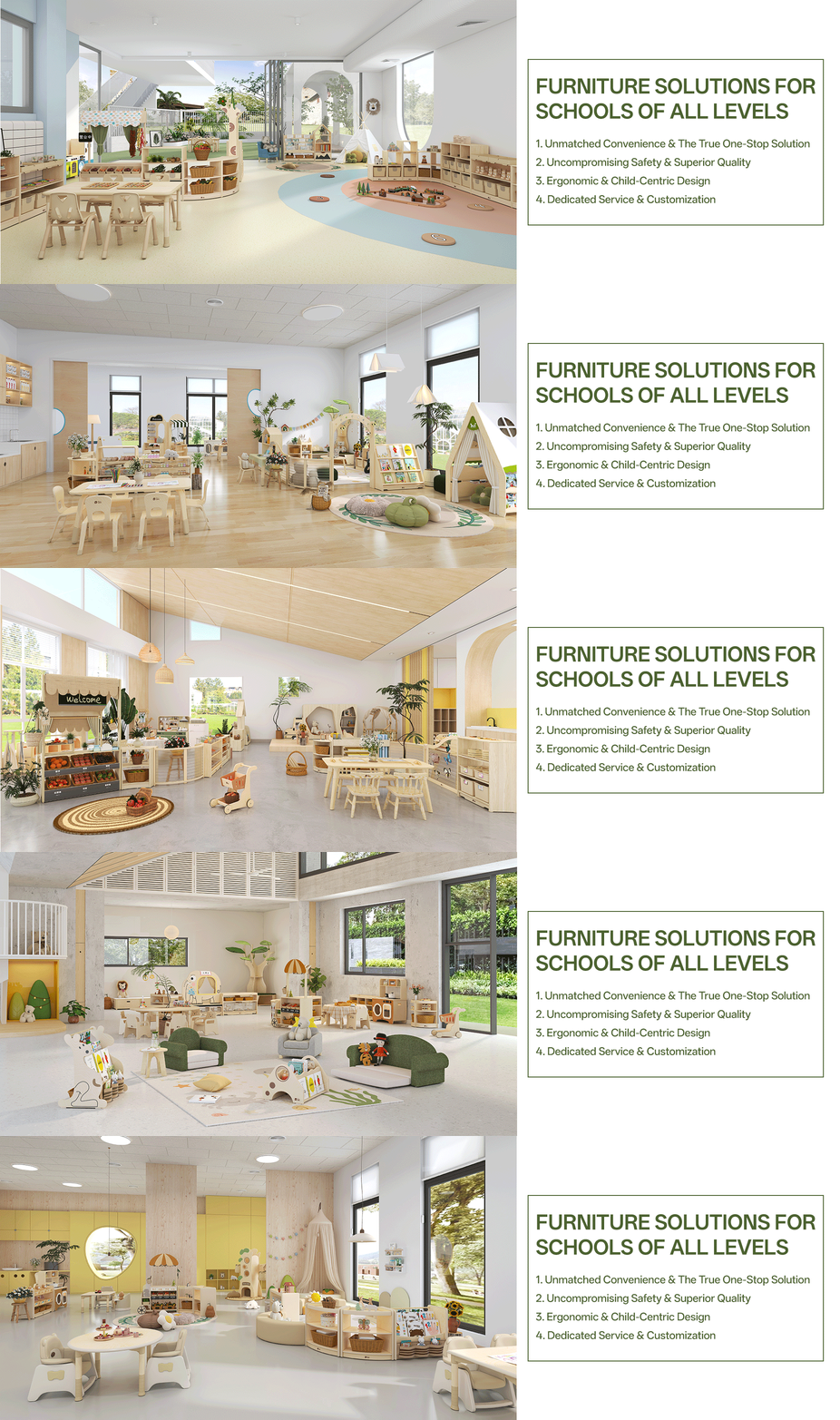
The traditional classroom, with its rows of fixed desks facing forward, is built on a model of passive reception. The new paradigm, as seen in leading institutions worldwide, embraces flexibility and child-centric design.
Flexible Seating & Agile Layouts: Research increasingly shows that choice and movement are crucial for engagement. A study on flexible seating found it can lead to greater comfort, increased focus, and reduced anxiety among students. This isn't about trendy beanbags; it's about empowering children. Our modular tables, lightweight stools, and mobile storage units allow a classroom to morph effortlessly from a collaborative art studio to a quiet reading nook to a circular discussion forum. The space adapts to the task and the children, not the other way around.
Zones for Discovery: Modern design breaks away from "one-size-fits-all" spaces. It creates intentional zones—a sensory corner for quiet regulation, a vibrant art station with "visible, accessible & classifiable" storage, a structured block area, and a soft, immersive reading grove. This segmentation supports diverse learning modalities and social needs, allowing for both bustling group play and peaceful individual inquiry.
Every material in a classroom sends a message. The cold, uniform perfection of plastic has its place, but the sensory richness of natural materials speaks directly to a child's developing mind and senses.
Cognitive and Ecological Affordances: Natural materials like solid wood, cotton, and wicker are not merely aesthetic choices. They possess varied textures, weights, and temperatures. A smooth maple block, a nubby woven basket, or the cool surface of a stone tile provides a multisensory experience that fosters observation, discrimination, and a connection to the real world. Using these materials for sorting or classification activities, for instance, introduces natural variation and prepares children for scientific thinking far more effectively than uniform, manufactured items.
Building a Sustainable Mindset: Choosing sustainably sourced wood and non-toxic, durable finishes is a commitment to our planet and our children's health. It’s an embodied lesson in stewardship. When we select furniture built to last for generations, we move away from a disposable culture and invest in quality that tells a story of care and longevity.
Meeting and exceeding international safety standards (like GB 28007, 3C, and EN71) is our baseline. True safety, however, is proactive and holistic.
Psychological Safety through Design: Safety is also emotional. The rounded, soft-curved edges of our furniture do more than prevent bumps; they create a physically welcoming and non-threatening environment. Thoughtful design minimizes overwhelming stimuli, using calm, natural color palettes to create spaces that feel secure and serene, reducing anxiety and allowing children to focus on exploration.
Inclusivity by Design: An inclusive classroom supports every learner. Features like easily adjustable table heights accommodate children of different sizes and abilities, while flexible seating options can be particularly beneficial for children who need to move to focus. Furniture that is scaled appropriately and easy to navigate fosters independence and a sense of belonging for all.
At Hikeylove, these insights are not just theory; they are the blueprint for our collections. We see ourselves not merely as manufacturers, but as partners in crafting "living landscapes for learning."
Our modular art and storage systems embody the principle of order and accessibility, empowering children to manage their resources.
The adaptable 6-person tables with multiple height settings grow with the class, supporting everything from toddler activities to complex kindergarten projects.
Our nature-inspired reading groves and calming nooks create those essential pockets of retreat and focus, answering the need for emotional regulation.
We invite you to join us in reimagining what a classroom can be. Let's move beyond filling a room with furniture and begin the more rewarding work of designing environments that inspire, nurture, and actively participate in the incredible journey of early childhood.
Ready to see how these principles can transform your space? Explore our collections, download our educational white papers, or contact our team for a consultation on creating your own "third teacher."

Leading Chinese brand for 20+ years, supplying eco-safe, design-driven kindergarten furniture & turnkey space solutions to 10,000+ preschools worldwide.
No. 26 Gongye Avenue, Shunjing Industrial Park, Banfu Town, Zhongshan City, Guangdong Province
Copyright © 2026 Zhongshan Haijilun Cultural And Educational Product Co., Ltd.. All rights reserved. Privacy Policy