For educators, directors, and designers committed to early childhood, the most profound question we can ask is not "What furniture do we need?" but rather, "What do we want this environment to teach?"
At Hikeylove, we believe the answer lies in a transformative concept: the learning space as The Third Teacher. The walls, the layout, and every piece of furniture within it are active, silent participants in the pedagogical process. They shape behavior, nurture emotional security, and either scaffold or hinder a child's innate drive to explore.
This article moves beyond procurement checklists to explore how contemporary educational insights are redefining early childhood classroom design trends. We will examine how intentional choices—in material, flexibility, and inclusivity—create dynamic play-based learning environments that do more than house children; they empower them.
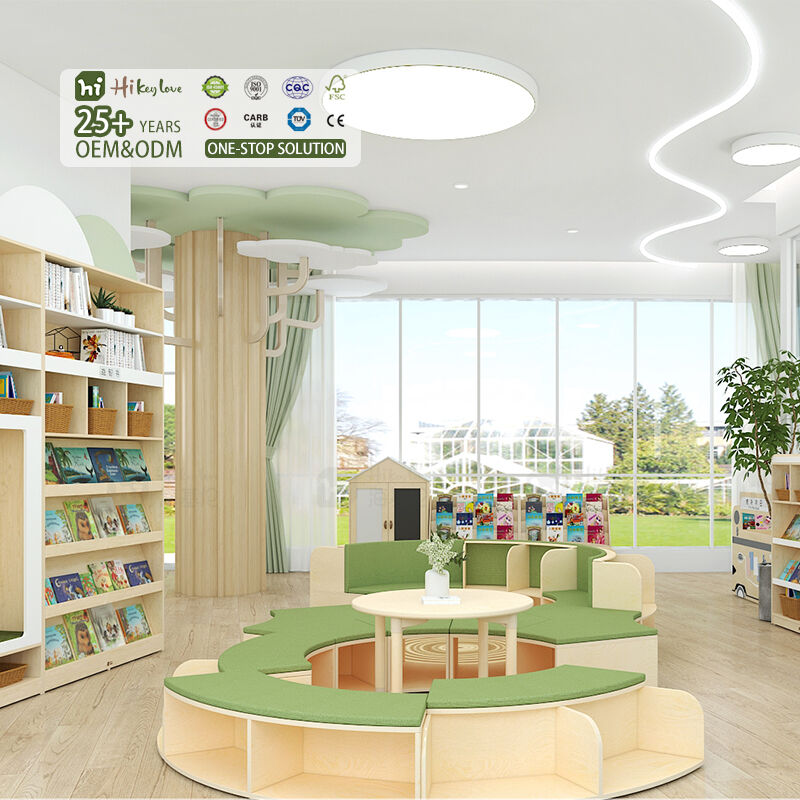
Part 1: Cultivating Connection: The Low-Tech, High-Touch Classroom
In an increasingly digital age, the early years stand as a vital sanctuary for sensory, relational learning. As highlighted in discussions on mindful classroom design, early childhood thrives on analog experiences where learning is powered by human connection and hands-on exploration. This philosophy is the cornerstone of our approach.
The Primacy of Natural and Tactile Materials: We champion the profound benefits of natural classroom materials. A smooth beechwood block, a woven rattan texture, or the cool surface of a stone tile provides authentic sensory feedback that a screen or uniform plastic cannot. These materials ground children in the tangible world, fostering calm, curiosity, and a connection to the environment. This aligns with the growing emphasis on sustainable preschool design, where choices teach stewardship through experience. Our furniture, crafted from solid woods with non-toxic finishes, makes this philosophy tangible, turning every touch into a moment of sensory learning.
Designing for Interaction over Isolation: A low-tech, high-connection classroom is intentionally arranged to promote collaboration. We design "connection corners" and communal tables not as afterthoughts, but as the heart of the room. Our modular seating and activity stations naturally draw children together for shared storytelling, cooperative problem-solving, and the essential, unstructured negotiations of play. This deliberate layout ensures the environment itself facilitates the peer-to-peer and child-to-educator interactions that are crucial for language and social-emotional development.
Part 2: Empowering Agency: The Critical Role of Flexibility and Movement
The static classroom of rows and fixed desks is designed for passive reception. The dynamic classroom is designed for active, child-led construction of knowledge. This is where the importance of flexible seating and adaptable layouts becomes paramount.
Choice as a Foundation for Self-Regulation: Research indicates that providing children with seating choices—such as floor cushions, low stools, or standing options—can support attention and engagement by allowing them to find positions that suit their comfort and learning needs. At Hikeylove, we build this choice into our DNA. Our lightweight, movable furniture empowers children to listen to their bodies. Can they focus better kneeling at a low table or sitting on a soft pad? This autonomy is a prerequisite for deep engagement and teaches critical self-regulation skills.
The Agile Environment: True flexibility means the space can evolve with the day's journey. Our modular systems allow a classroom to transform from a collaborative art studio to a quiet reading nook to a bustling market for dramatic play. This agility isn't a trend; it's a responsive pedagogy made physical. It minimizes disruptive transitions and maximizes engaged exploration, a key principle in effective classroom organization tips and a feature evaluated in quality frameworks like the ECERS-R under "space and furnishings".
Part 3: Safety Reimagined: From Compliance to Holistic Inclusivity
Meeting stringent international safety standards is our non-negotiable baseline. But true safety is holistic, encompassing physical, emotional, and psychological well-being—a core tenet of creating inclusive classrooms.
Psychological Safety through Form and Function: Inclusivity means every child feels the environment is for them. Our furniture's soft, rounded edges do more than prevent bumps; they create a visually welcoming, non-threatening atmosphere. Calming color palettes and the option for cozy, semi-enclosed nooks (like our Woven Retreats) offer respectful retreats for children feeling overwhelmed, supporting emotional regulation and a sense of control.
Universal Design for Growing Bodies: Inclusivity is also physical. Following principles seen in award-winning universal design, features like easily adjustable table heights accommodate not just different ages but different abilities, ensuring every child can participate fully. When considering how to choose preschool furniture, asking if it can be adapted for diverse users is as important as checking for durability. This thoughtful design directly supports higher quality ratings in tools like the ECERS rating system, which evaluates how furnishings and space meet the needs of all children.
The Hikeylove Integration: Where Insight Becomes Tangible
For over two decades, we have translated these educational insights into robust, beautiful, and purposeful solutions. Our collections are the building blocks for your "Third Teacher."
Our Modular Sorting Cabinet embodies executive function. Its clear, labeled grid transforms cleanup into a cognitive exercise in classification and responsibility, making abstract "order" concrete.
Our Double-Sided Creation Stations champion convergent learning. They fluidly merge literacy, art, and display, acting as a mobile hub where different forms of expression intersect.
Our flexible seating and height-adjustable tables form the dynamic landscape of the room, empowering children to reconfigure their space for collaboration, focus, or play.
Ultimately, a kindergarten furniture buying guide should start with vision, not items. By partnering with Hikeylove, you move beyond filling a room to architecting an ecosystem for human potential. Let's co-create spaces that don't just hold children, but hold their attention, their wonder, and their growing sense of self.
Ready to see how these principles transform space? Explore our thoughtfully curated collections or connect with our team to begin designing your ultimate "Third Teacher."

