
There is a moment in every Montessori classroom that reveals something profound about children. It happens when a toddler carefully returns a puzzle to its shelf, even though no one asked. When a preschooler chooses a quiet corner to work alone, even though friends are playing nearby. When a child pauses, looks at a space, and seems to understand without being told what belongs where and what comes next.
This moment is not magic. It is the result of something Dr. Maria Montessori understood deeply: children absorb their environment. Not through instruction, but through experience. Not through words, but through the quiet conversation between a child and the world around them.
At Hikeylove, we ha ve spent 25 years learning to listen to this conversation. We have designed furniture for over 20,000 institutions worldwide, and along the way, we have discovered something that would make Maria Montessori smile: furniture is never just furniture. It is the physical language through which children learn to navigate their world. It is the invisible curriculum that teaches independence, concentration, order, and respect—without a single lesson plan.
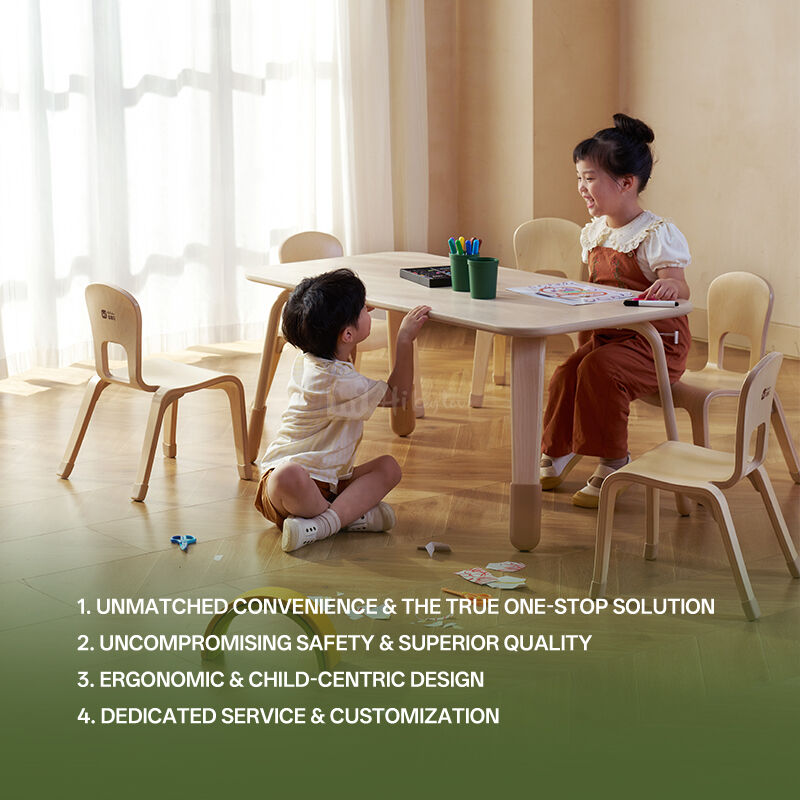
Montessori observed that children learn through their hands. Long before they can read or write, they explore by touching, manipulating, and moving through space. The hand, she said, is the instrument of intelligence. What children learn with their hands stays with them in ways that passive instruction never can.
What this means for furniture:
When a child pulls a book from a low shelf, their hand learns that choices are available and accessible. When they lift a chair and move it to a new spot, their hand learns that the environment can be shaped to their needs. When they place a block back in its designated spot, their hand learns that order is satisfying, not restrictive.
This is why Montessori classrooms are filled with materials designed for the hand. And it is why at Hikeylove, every piece of furniture is designed with the hand in mind. Our open shelving invites children to reach, choose, and return. Our lightweight tables and chairs allow small bodies to move furniture independently. Our modular systems give children the power to shape their own environment. We do not simply create furniture for children to use. We create furniture for children to learn with—through their hands, their bodies, and their choices.
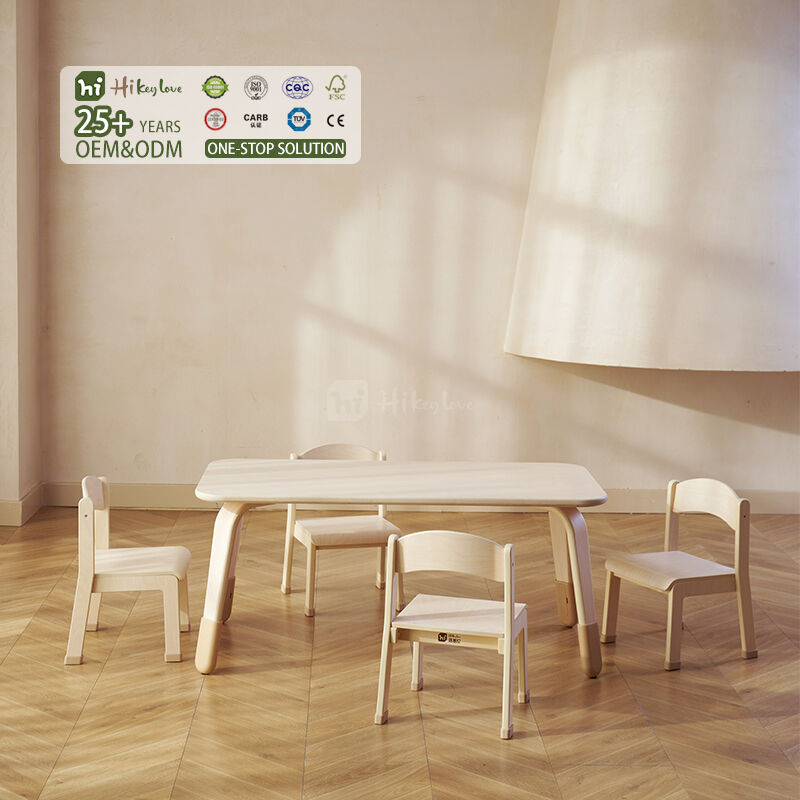
One of Montessori's most brilliant insights was the concept of sensitive periods. These are windows of time when children are particularly receptive to learning specific skills. During these periods, the environment becomes crucial. It can either support the child's natural development or create obstacles that lead to frustration and delay.
The sensitive period for order (ages 1-3):
During this time, children are deeply attuned to consistency and predictability. They want things in their place. They notice when something is out of order. They are building mental frameworks for how the world works.
When the environment is chaotic, this sensitive period becomes a source of stress. When the environment is orderly, it becomes a source of satisfaction and security.
At Hikeylove, we design for this sensitive period with our geometric shelving and stepped storage systems. These pieces create visual order that children can understand intuitively. Every material has its place. Every shelf is logically organized. The environment itself teaches that order is not a restriction but a framework for freedom.
The sensitive period for language (ages 0-6):
During this time, children are absorbing language at an astonishing rate. They are building the vocabulary and syntax that will shape their thinking for life. The environment can support this by offering rich opportunities for conversation and storytelling.
Our reading nooks are designed to invite quiet, focused engagement with books. Our dramatic play sets create natural opportunities for conversation and negotiation. Our art spaces provide tools for children to tell stories in their own visual language. We create environments where language can flourish—not through instruction, but through invitation.
The sensitive period for social skills (ages 2.5-6):
During this time, children are learning to navigate relationships. They are discovering how to share, take turns, negotiate, and collaborate. The environment can either facilitate or hinder this development.
Our modular play systems are designed for group interaction. Multiple children can play together, each finding their role. Our flexible seating allows children to work alone, in pairs, or in groups, depending on their needs. Our outdoor solutions create spaces for cooperative play that builds social skills naturally. We design for connection, not isolation.
Perhaps Montessori's most radical idea was that young children learn differently than adults. Adults learn through conscious effort and instruction. Young children learn through absorption. They take in their environment whole, without effort, without trying. Everything around them becomes part of who they are.
What this means for furniture:
If children absorb their environment, then every element of that environment becomes a lesson. A cluttered room teaches that chaos is normal. A beautiful, orderly room teaches that order and beauty are possible. Furniture that is difficult to use teaches that independence is hard. Furniture that fits teaches that the world is designed for them.
This is why we take such care with every piece we create. A child who grows up reaching for books on low, open shelves learns that knowledge is accessible. A child who can hang their own coat on a hook their size learns that they are capable. A child who returns materials to designated spaces learns that they are responsible for their environment. These lessons are not taught. They are absorbed. They become part of who the child is.
Montessori understood that the environment is not neutral. It shapes not only what children learn but who they become. A well-prepared environment teaches children to respect themselves, each other, and the world around them. It teaches that beauty is worth caring for, that order supports freedom, and that every person has a place.
How we design for moral development:
Our furniture is built to last because we believe children should learn that quality matters. Our materials are natural and beautiful because we believe children deserve beauty. Our designs are safe without being restrictive because we believe children should feel trusted. Every piece we create carries a quiet lesson about how to treat the world and how the world treats us.
When you choose Hikeylove, you are choosing more than furniture. You are choosing a partner who understands that the environment teaches. You are choosing pieces designed for small hands, sensitive periods, and the absorbent mind. You are choosing to honor the invisible curriculum that Montessori understood so well.
We have spent 25 years learning to speak this language. We have designed for thousands of classrooms, watched millions of children interact with our pieces, and refined our approach with every insight. We do not simply manufacture furniture. We create the physical foundation for a child's most important learning.
We would be honored to partner with you.
Ready to create a prepared environment for the children in your care? Explore our collections, connect with our team, or schedule a consultation. Together, let's build spaces where children don't just learn—they become who they are meant to be.

Leading Chinese brand for 20+ years, supplying eco-safe, design-driven kindergarten furniture & turnkey space solutions to 10,000+ preschools worldwide.
No. 26 Gongye Avenue, Shunjing Industrial Park, Banfu Town, Zhongshan City, Guangdong Province
Copyright © 2026 Zhongshan Haijilun Cultural And Educational Product Co., Ltd.. All rights reserved. Privacy Policy