The selection of kindergarten furniture goes far beyond simple functionality and durability considerations. Modern educational environments recognize that the visual elements of classroom design, particularly color and shape choices in furniture pieces, profoundly impact young children's cognitive development, emotional well-being, and learning outcomes. Understanding the psychological principles behind these design decisions enables educators, administrators, and parents to create more effective learning spaces that support optimal child development during these crucial formative years.
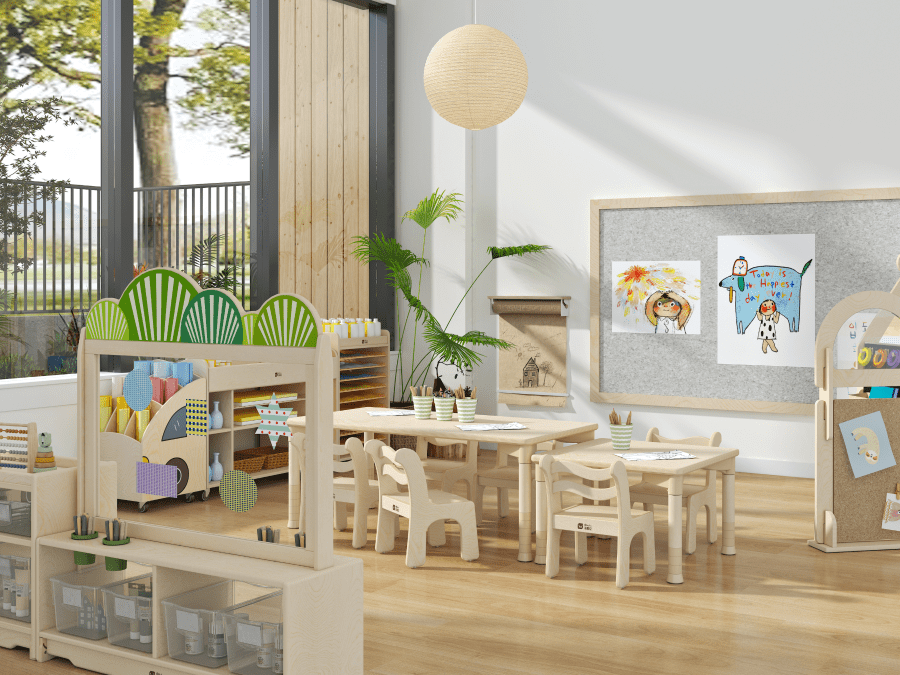
Research in environmental psychology demonstrates that children respond to visual stimuli differently than adults, making strategic furniture selection a critical component of classroom design. The colors and shapes present in kindergarten furniture directly influence attention spans, creativity levels, social interaction patterns, and overall comfort within educational settings. These factors contribute significantly to creating environments where young learners can thrive academically and socially.
The Science Behind Color Psychology in Early Childhood Education
How Colors Affect Young Minds
Color perception in young children operates on both conscious and subconscious levels, triggering immediate emotional and physiological responses that can either enhance or hinder learning experiences. Warm colors such as red, orange, and yellow tend to stimulate energy and enthusiasm, making them excellent choices for active learning areas within kindergarten environments. However, excessive use of these stimulating colors in kindergarten furniture can lead to overstimulation and difficulty maintaining focus during quiet activities.
Cool colors including blue, green, and purple create calming environments that promote concentration and peaceful interaction among children. These colors work particularly well in reading corners, rest areas, and spaces designated for individual work. The strategic incorporation of cool-toned kindergarten furniture helps establish zones where children can decompress and engage in more focused learning activities without external visual distractions.
Neutral colors such as beige, gray, and white serve as important balance elements in kindergarten furniture selections. These colors provide visual rest for young eyes while allowing accent colors to create focal points throughout the learning environment. Neutral-toned furniture pieces also offer flexibility for seasonal decorations and changing educational themes without creating visual conflicts or overwhelming sensory experiences.
Cultural Considerations in Color Selection
Different cultural backgrounds bring varying associations and meanings to color choices, making it essential to consider the diverse populations served by kindergarten programs when selecting furniture colors. While Western cultures often associate green with nature and calm, some Eastern cultures view green differently, potentially affecting how children from these backgrounds respond to green kindergarten furniture in their learning environment.
Understanding these cultural nuances allows educators to make more inclusive furniture choices that respect diverse backgrounds while creating universally welcoming environments. This consideration extends beyond simple color preferences to include understanding how different cultures use color in their traditional learning and play environments, informing more culturally responsive kindergarten furniture selection processes.
Shape Psychology and Its Impact on Learning Environments
Geometric Shapes and Cognitive Development
The geometric properties of kindergarten furniture significantly influence how children interact with their learning environment and develop spatial reasoning skills. Rounded edges and curved designs create feelings of safety and comfort, encouraging exploration and risk-taking in learning activities. This psychological response to curved shapes makes them particularly valuable in Kindergarten Furniture designed for younger children who may still be developing confidence in group settings.
Angular shapes and straight lines communicate structure, order, and stability, helping children understand boundaries and expectations within the classroom environment. Rectangular tables and square seating arrangements facilitate organized group activities and collaborative learning experiences. The combination of angular and curved elements in kindergarten furniture selections provides balanced environments that support both structured learning and creative exploration.
Triangular and hexagonal shapes introduce mathematical concepts naturally into the learning environment while creating visually interesting focal points that capture children's attention. These geometric forms in kindergarten furniture can serve as conversation starters for geometry lessons and spatial relationship discussions, integrating educational content seamlessly into the physical environment.
Size Proportions and Child Development
The proportional relationships between different furniture pieces create subconscious messages about hierarchy, accessibility, and belonging within kindergarten environments. Child-sized furniture communicates that the space belongs to them, fostering independence and confidence in navigation and use. When kindergarten furniture maintains appropriate scale relationships, children develop better spatial awareness and feel more empowered to interact with their environment.
Varied heights and sizes within furniture collections accommodate different developmental stages and physical abilities, ensuring that all children can participate fully in classroom activities. This inclusive approach to kindergarten furniture proportions supports both individual needs and group dynamics, creating environments where every child can find comfortable and appropriate seating or work surfaces.
Creating Optimal Learning Zones Through Strategic Design
Active Learning Areas
Designing active learning zones requires kindergarten furniture selections that can withstand high energy activities while channeling that energy productively. Bright, stimulating colors in these areas help maintain enthusiasm and engagement during physical activities, creative projects, and collaborative group work. The furniture shapes should facilitate movement and interaction while providing clear boundaries that help children understand activity expectations.
Flexible furniture configurations allow teachers to adapt active learning spaces for different activities throughout the day. Lightweight, easily moveable kindergarten furniture pieces enable quick transitions between individual work, small group projects, and whole-class activities. This adaptability supports diverse learning styles and helps maintain student engagement through varied environmental experiences.
Storage solutions integrated into active learning furniture help maintain organization while teaching children responsibility for their learning materials. Open shelving with colorful bins and accessible compartments encourage independence while supporting the active, hands-on learning that characterizes effective kindergarten education programs.
Quiet Learning Spaces
Quiet learning zones require kindergarten furniture that promotes focus, calm, and individual concentration. Softer colors and comfortable seating options create inviting spaces where children can engage in reading, reflection, and independent work without distraction. The psychological impact of these calming furniture choices helps children transition from high-energy activities to more focused learning tasks.
Curved furniture shapes in quiet areas provide psychological comfort and security, encouraging children to spend extended time in focused learning activities. These design choices support the development of attention skills and self-regulation abilities that are crucial for academic success. Kindergarten furniture in quiet zones should create a sense of enclosure without isolation, maintaining visual connection to the broader classroom while providing necessary calm.
Practical Implementation Strategies for Educators
Assessment and Planning
Successful implementation of psychological principles in kindergarten furniture selection begins with comprehensive assessment of existing classroom dynamics, student populations, and educational goals. Observing how children currently interact with furniture and spaces provides valuable insights into which colors and shapes might enhance or improve their learning experiences. This observational data forms the foundation for strategic furniture selection decisions.
Planning processes should involve collaboration between educators, administrators, and child development specialists to ensure that kindergarten furniture choices align with pedagogical objectives and developmental appropriateness. Regular evaluation and adjustment of furniture arrangements allows for continuous improvement and responsiveness to changing classroom needs throughout the academic year.
Budget considerations must balance psychological benefits with practical limitations, requiring creative solutions that maximize impact while maintaining fiscal responsibility. Phased implementation strategies can spread costs over time while allowing for assessment of effectiveness before making additional investments in specialized kindergarten furniture pieces.
Maintenance and Sustainability
Long-term success with psychologically-informed kindergarten furniture selections requires ongoing maintenance strategies that preserve both functionality and aesthetic appeal. Color choices should consider fade resistance and cleanability to maintain their psychological impact over extended use periods. Durable materials and construction ensure that furniture pieces continue to provide appropriate psychological benefits throughout their intended lifespan.
Sustainability considerations in kindergarten furniture selection align psychological benefits with environmental responsibility, teaching children important values while creating effective learning environments. Eco-friendly materials and manufacturing processes can enhance the positive psychological impact of furniture choices while supporting broader educational goals related to environmental awareness and social responsibility.
Measuring Success and Making Adjustments
Observational Assessment Techniques
Evaluating the effectiveness of kindergarten furniture selections requires systematic observation of child behavior, engagement levels, and learning outcomes following implementation. Teachers can document changes in attention spans, social interaction patterns, and overall classroom atmosphere to assess whether furniture choices are achieving intended psychological impacts. These observations provide valuable feedback for future furniture selection decisions.
Standardized assessment tools adapted for early childhood environments can provide more objective measures of furniture effectiveness. Tracking metrics such as time-on-task, conflict frequency, and learning milestone achievement helps quantify the impact of psychological design principles in kindergarten furniture selection. Regular data collection ensures that furniture investments continue to support educational objectives effectively.
Continuous Improvement Processes
Successful kindergarten furniture programs require ongoing evaluation and refinement based on changing student needs, educational approaches, and available resources. Seasonal adjustments to furniture arrangements and color accents can maintain psychological freshness while accommodating curriculum changes and developmental progressions throughout the school year.
Professional development opportunities for educators enhance their ability to recognize and respond to psychological cues in classroom environments. Training in color psychology, spatial design, and child development ensures that kindergarten furniture selections continue to evolve with best practices in early childhood education and environmental psychology research.
FAQ
What colors work best for different areas in kindergarten classrooms
The most effective color schemes for kindergarten furniture depend on the intended use of each classroom area. Active learning zones benefit from warm colors like red, orange, and yellow that stimulate energy and engagement, while quiet areas work best with cool colors such as blue and green that promote calm and concentration. Reading corners and rest areas should incorporate soft, neutral tones that create feelings of comfort and security. The key is balancing stimulating and calming colors throughout the space to support different types of learning activities while avoiding overstimulation.
How do furniture shapes affect children's behavior and learning
Furniture shapes have significant psychological impacts on children's behavior and learning patterns. Rounded, curved furniture creates feelings of safety and comfort, encouraging exploration and risk-taking in learning activities, while angular shapes provide structure and clear boundaries that help children understand expectations. Circular seating arrangements promote collaboration and equal participation, whereas rectangular configurations support focused individual work. The combination of different shapes in kindergarten furniture selections helps create balanced environments that support various learning styles and activities.
What safety considerations should guide kindergarten furniture selection
Safety considerations in kindergarten furniture selection extend beyond basic structural requirements to include psychological safety factors. Rounded edges and stable bases prevent physical injuries while also creating psychological comfort that encourages confident exploration. Appropriate sizing ensures children can use furniture independently without assistance, building self-confidence and autonomy. Non-toxic materials and finishes protect physical health while bright, cheerful colors support emotional well-being. Age-appropriate proportions help children feel secure and competent in their learning environment.
How can schools implement psychological design principles on limited budgets
Schools with limited budgets can implement psychological design principles in kindergarten furniture selection through strategic, phased approaches. Start with high-impact, low-cost changes such as colorful seat cushions, removable covers, or painted accents on existing furniture. Focus initial investments on versatile pieces that can serve multiple functions and be reconfigured for different activities. Consider DIY projects involving staff, parents, and community volunteers to refresh furniture colors and add psychological appeal. Grant opportunities and partnerships with local businesses can also provide funding for kindergarten furniture upgrades that incorporate psychological design principles effectively.
