Premium Montessori Preschool Furniture - Child-Sized Learning Solutions for Early Education

Get a Free Quote

Our representative will contact you soon.
Email
Name
Company Name
Mobile/WhatsApp
Message
0/1000

montessori preschool furniture

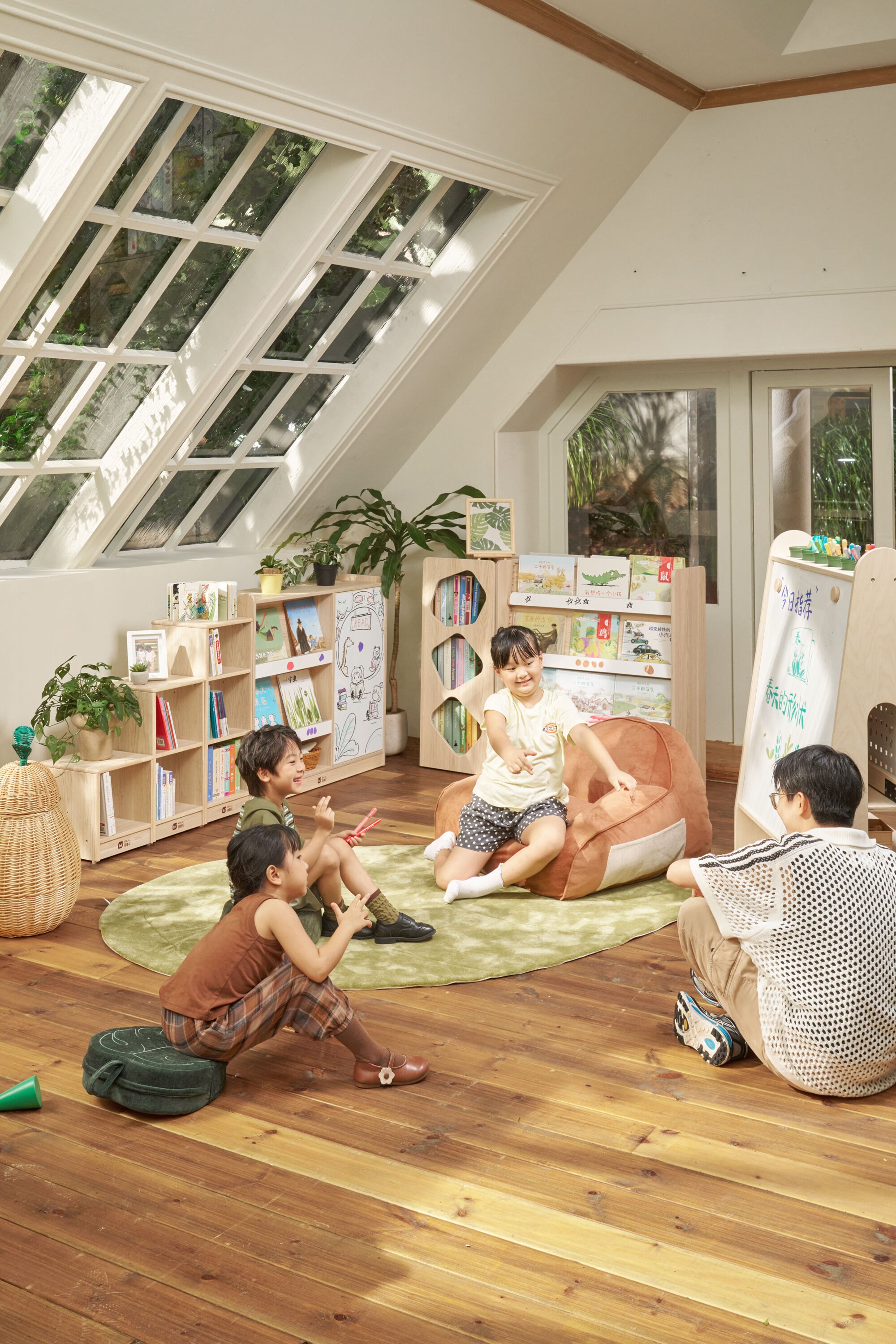
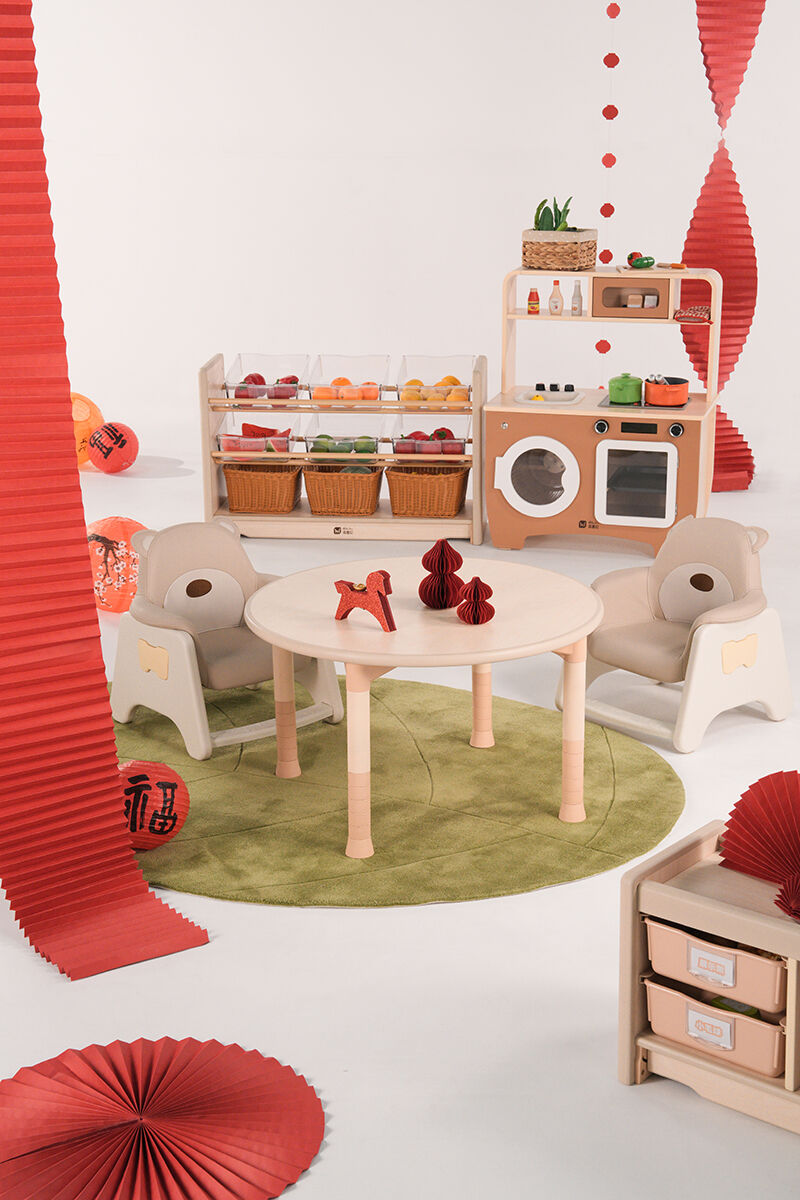
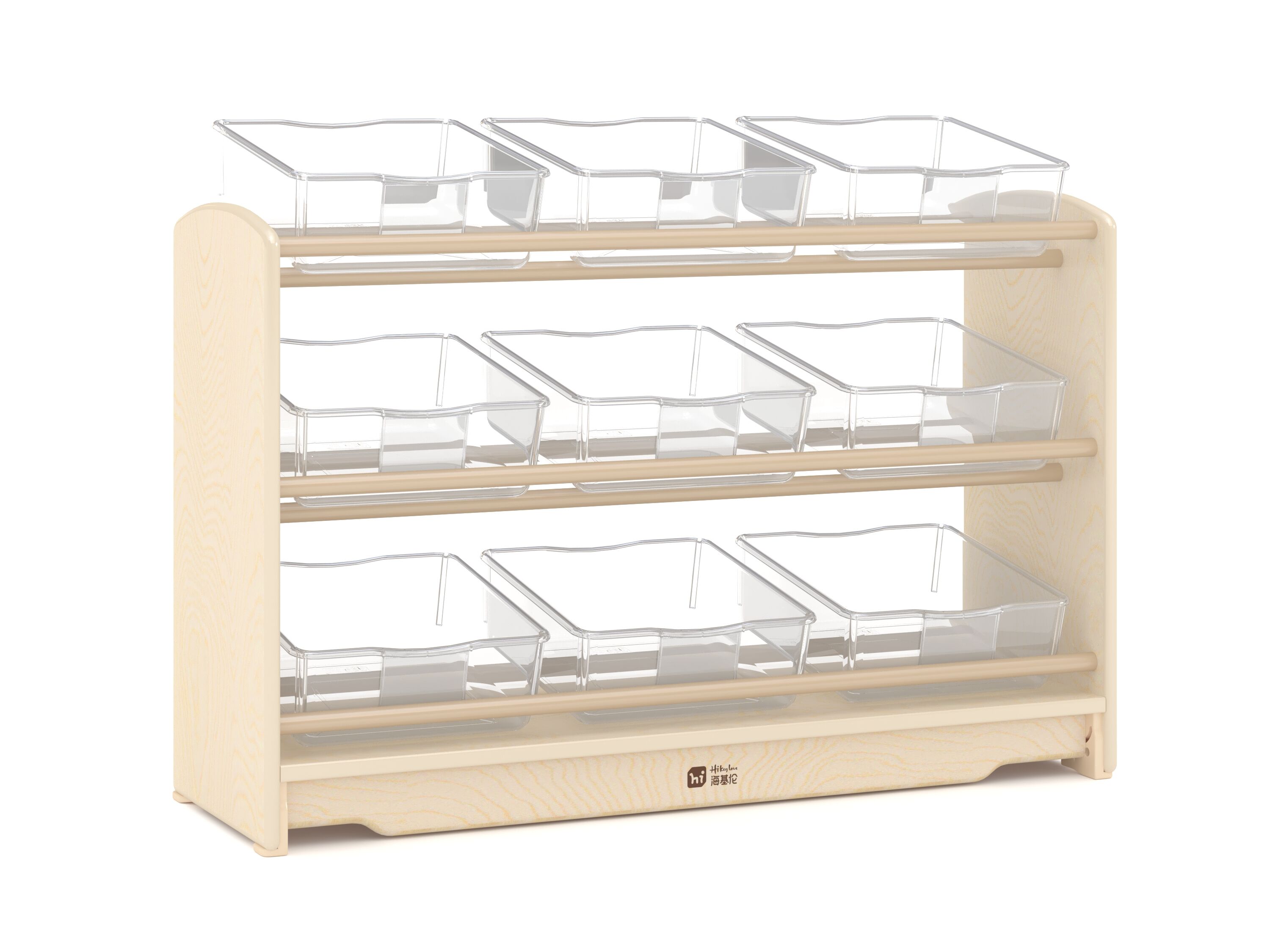
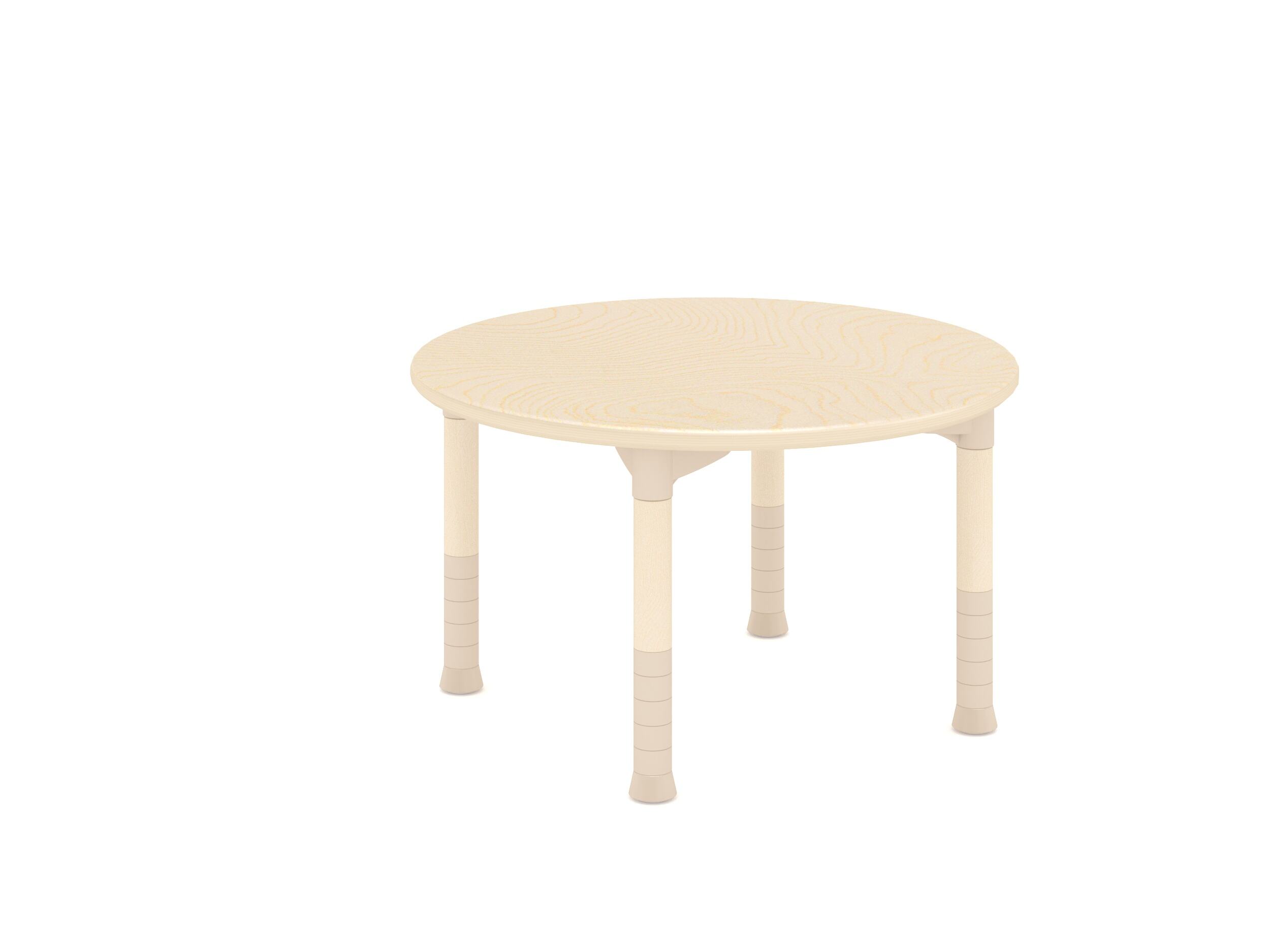
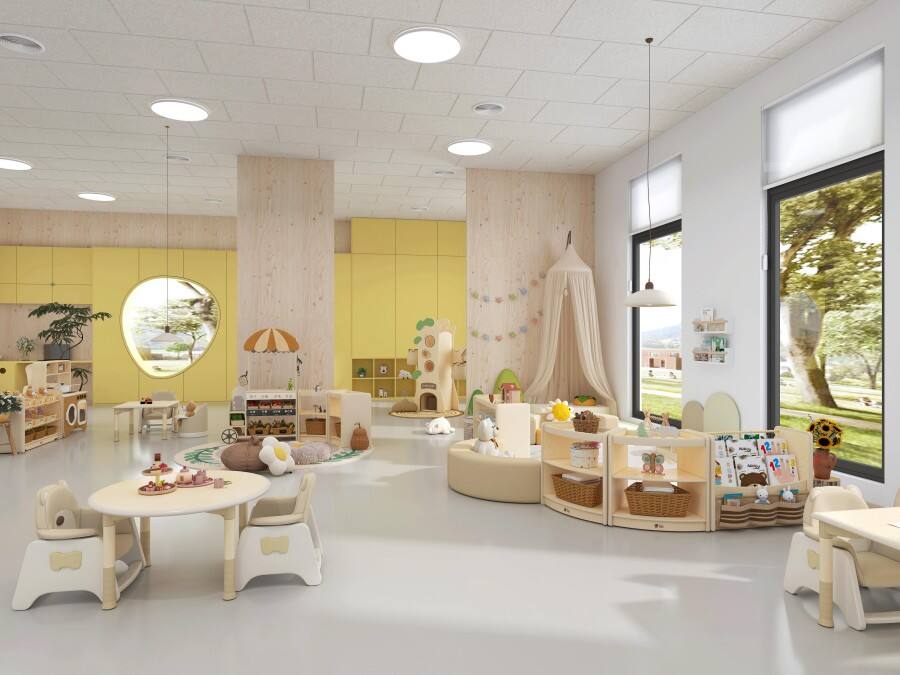
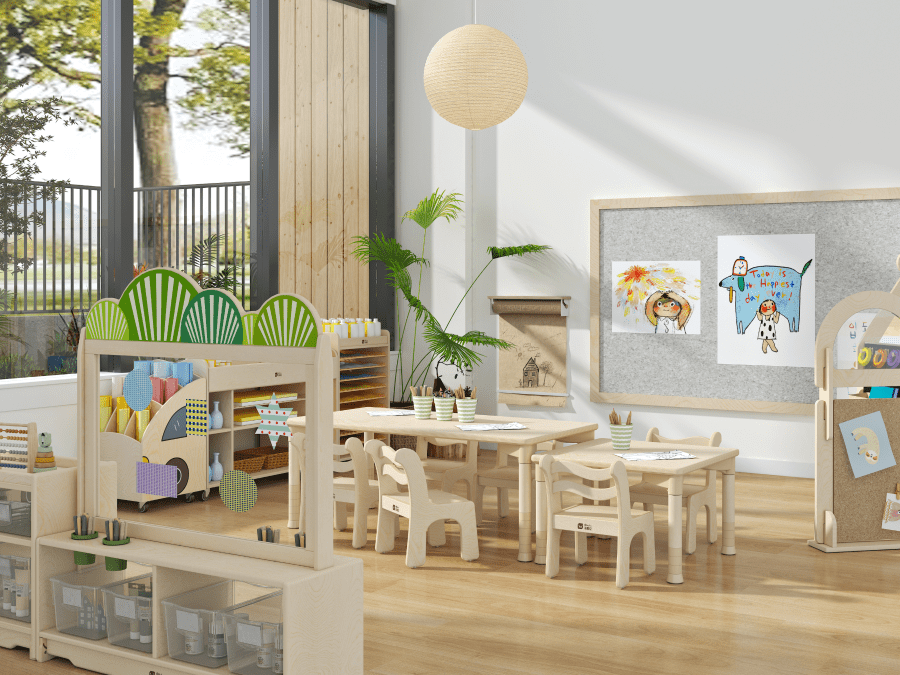
Montessori preschool furniture represents a revolutionary approach to early childhood education environments, designed specifically to align with Maria Montessori's pedagogical philosophy. This specialized furniture category encompasses child-sized tables, chairs, shelving units, learning stations, and storage solutions that prioritize independence, accessibility, and natural learning experiences. The fundamental principle behind montessori preschool furniture lies in creating an environment where children can freely explore, learn, and develop essential life skills without constant adult intervention. Each piece is meticulously crafted to match the physical dimensions and developmental needs of young learners aged 2-6 years. The main functions of montessori preschool furniture include fostering independence through appropriately scaled pieces, promoting order and organization through designated spaces for materials, and supporting various learning activities through versatile design elements. Technologically, this furniture incorporates rounded edges for safety, non-toxic finishes that meet stringent educational standards, and durable construction materials that withstand daily classroom use. Natural wood construction predominates, offering tactile experiences that connect children with organic materials while ensuring longevity and sustainability. The applications of montessori preschool furniture extend across multiple learning environments including traditional Montessori schools, progressive preschools, homeschool settings, and therapeutic educational spaces. These pieces facilitate practical life activities, sensorial explorations, language development, and mathematical concepts through their thoughtful design. The modular nature of many montessori preschool furniture pieces allows educators to reconfigure classroom layouts according to specific learning objectives or seasonal activities. Storage components feature low, accessible compartments that enable children to independently retrieve and return materials, reinforcing the Montessori principle of personal responsibility and environmental care.


Popular Products

The advantages of montessori preschool furniture extend far beyond conventional classroom seating and storage solutions, delivering tangible benefits that directly impact child development and educational outcomes. First and foremost, this furniture promotes genuine independence by ensuring every piece remains within easy reach of small hands. Children develop confidence and self-reliance when they can independently access materials, arrange their workspace, and maintain their environment without requiring adult assistance. This independence translates into stronger problem-solving skills and increased self-esteem that benefits children throughout their educational journey. Safety represents another paramount advantage, as montessori preschool furniture incorporates thoughtful design elements that minimize injury risks. Rounded corners eliminate sharp edges, while stable bases prevent tipping accidents that commonly occur with adult-sized furniture. The low height of tables and chairs reduces fall distances, and non-slip surfaces provide secure footing during activities. Parents and educators appreciate these safety features that create worry-free learning environments. Durability stands as a significant economic advantage, with montessori preschool furniture constructed from premium materials that withstand years of intensive use. Solid wood construction and reinforced joints ensure these investments last through multiple generations of students, providing exceptional value compared to disposable alternatives. The timeless design aesthetic means furniture remains visually appealing and functional regardless of changing educational trends. Educational effectiveness increases dramatically when children interact with properly scaled furniture designed for their developmental stage. Montessori preschool furniture supports natural learning progressions by accommodating various activities simultaneously within the same space. Children can seamlessly transition between individual work, small group collaborations, and whole-class discussions without struggling with oversized or inappropriate furniture. This flexibility enhances learning engagement and reduces behavioral disruptions caused by physical discomfort. Environmental consciousness represents another compelling advantage, as most montessori preschool furniture utilizes sustainable materials and manufacturing processes. Natural wood finishes avoid harmful chemicals while providing beautiful, organic aesthetics that create calming, nature-connected learning spaces. This environmental responsibility teaches children valuable lessons about sustainability and respect for natural resources.

Practical Tips

Inside Hikeylove's R&D Lab: Where the Ethos of

09

Dec

Inside Hikeylove's R&D Lab: Where the Ethos of "Quality Companions for Growth" Is Forged

View More
Hikeylove Your Partner in Getting It There Smoothly: A Look at Our Logistics & Care

24

Dec

Hikeylove Your Partner in Getting It There Smoothly: A Look at Our Logistics & Care

View More
Beyond Bookshelves: Crafting a Preschool Reading Nook That Inspires Young Minds

26

Dec

Beyond Bookshelves: Crafting a Preschool Reading Nook That Inspires Young Minds

View More
Welcoming 2026: A Year of Transformative Spaces for Growth and Learning

30

Dec

Welcoming 2026: A Year of Transformative Spaces for Growth and Learning

View More

Get a Free Quote

Our representative will contact you soon.
Email
Name
Company Name
Mobile/WhatsApp
Message
0/1000

montessori preschool furniture

Child-Centered Proportional Design

Child-Centered Proportional Design

The cornerstone advantage of montessori preschool furniture lies in its revolutionary child-centered proportional design that fundamentally transforms how young learners interact with their educational environment. Unlike conventional furniture that forces children to adapt to adult-sized dimensions, montessori preschool furniture reverses this paradigm by creating spaces perfectly suited to developing bodies and minds. Every measurement, from table heights to chair depths, reflects careful consideration of anthropometric data specific to children aged 2-6 years. This precision ensures optimal posture support, reducing physical strain that can distract from learning activities. When children sit comfortably without dangling feet or hunched shoulders, they maintain better focus and demonstrate increased engagement with educational materials. The proportional design extends beyond basic seating to encompass all classroom elements including shelving units positioned at eye level, storage compartments accessible without stretching, and work surfaces that accommodate natural arm positions. This thoughtful scaling empowers children to take ownership of their learning space, fostering independence that builds confidence and self-efficacy. Research consistently demonstrates that children working with appropriately sized montessori preschool furniture show improved concentration spans, enhanced fine motor skill development, and greater willingness to engage in challenging tasks. The psychological impact proves equally significant, as children feel valued and respected when their physical needs receive proper attention. This furniture design philosophy communicates that children deserve environments created specifically for them, not merely scaled-down adult spaces. Parents observe remarkable transformations in their children's behavior and learning enthusiasm when montessori preschool furniture replaces conventional options, with many reporting increased independence and responsibility at home as children apply skills developed in properly designed educational environments.
Multi-Functional Learning Integration

Multi-Functional Learning Integration

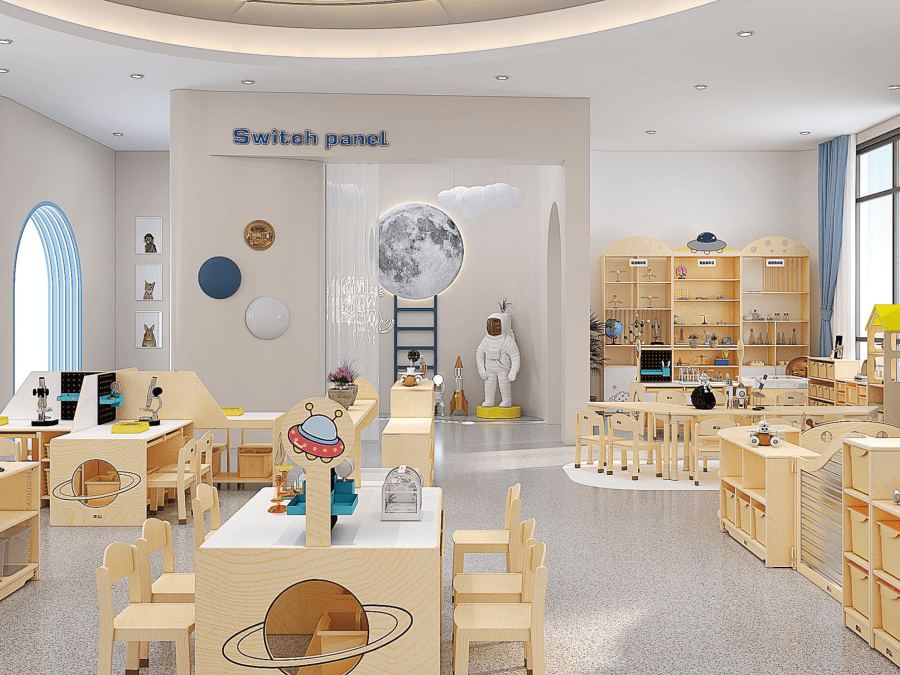
Montessori preschool furniture excels through its sophisticated multi-functional learning integration capabilities that maximize educational value within limited classroom space while supporting diverse learning styles and developmental needs. Each piece serves multiple purposes, transforming throughout the day to accommodate different activities and learning objectives. Tables function as individual workstations during focused tasks, collaborative surfaces for group projects, and presentation platforms for sharing discoveries. This versatility eliminates the need for separate furniture pieces for different activities, creating more efficient use of valuable classroom real estate while reducing costs for educational institutions. The integration extends to storage solutions that double as room dividers, creating intimate learning nooks while maintaining open sight lines for supervision. Low shelving units serve as both material storage and natural boundaries between different classroom zones, helping children understand spatial organization and activity expectations. Many montessori preschool furniture pieces incorporate built-in organizational features like compartmentalized drawers, designated material slots, and visual cues that guide proper arrangement. These elements teach valuable life skills including organization, categorization, and responsibility while supporting academic learning objectives. The furniture adapts to various pedagogical approaches, seamlessly supporting individual exploration, peer collaboration, and teacher-led instruction within the same physical framework. Modular components allow educators to reconfigure spaces according to seasonal themes, special projects, or evolving curriculum needs without requiring additional investments. This adaptability proves especially valuable in modern educational settings where flexibility and resource optimization remain paramount concerns. Children benefit from experiencing different spatial arrangements that challenge their problem-solving abilities and encourage creative thinking about how environments can be modified to support learning goals.
Natural Material Sensory Enhancement

Natural Material Sensory Enhancement

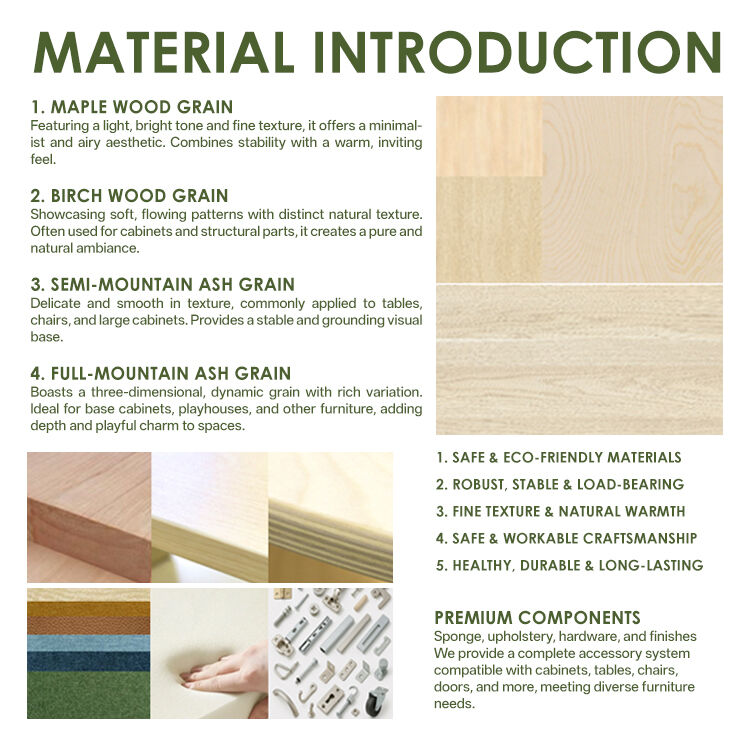
The natural material sensory enhancement provided by montessori preschool furniture creates profound developmental benefits that extend far beyond basic functionality, engaging multiple senses to create rich learning experiences that synthetic alternatives cannot replicate. Premium hardwoods like birch, oak, and maple offer unique tactile experiences that stimulate sensory development while providing durable, beautiful surfaces that age gracefully over time. Children naturally gravitate toward these organic textures, unconsciously developing tactile discrimination skills as they interact with different wood grains, surface treatments, and natural variations. The warmth of wood creates inviting environments that feel comfortable and welcoming, contrasting sharply with cold metal or plastic alternatives that can feel institutional and unwelcoming. Natural materials regulate temperature naturally, remaining comfortable to touch regardless of ambient conditions, while synthetic materials can become uncomfortably hot or cold. The subtle variations in wood grain patterns provide visual interest that stimulates observation skills without overwhelming developing sensory systems. Children learn to appreciate natural beauty and develop aesthetic awareness through daily interaction with thoughtfully crafted montessori preschool furniture. Beyond tactile benefits, natural materials contribute to healthier indoor air quality by avoiding off-gassing associated with synthetic materials and chemical treatments. This consideration proves especially important in preschool environments where developing respiratory systems require protection from harmful substances. The sustainable nature of responsibly sourced wood teaches environmental stewardship by example, demonstrating how natural resources can be utilized respectfully and responsibly. Children develop unconscious connections to nature through these daily interactions, fostering environmental consciousness that influences lifelong attitudes toward sustainability. The acoustic properties of wood also contribute to better classroom sound management, absorbing excess noise while reflecting speech frequencies that support clear communication. This natural sound dampening creates calmer learning environments that reduce stress and support better concentration among both children and educators.

Get a Free Quote

Our representative will contact you soon.
Email
Name
Company Name
Mobile/WhatsApp
Message
0/1000