
Selecting the right daycare furniture is one of the most critical decisions early childhood educators and facility owners face when creating a safe, functional, and engaging learning environment. Yet despite its importance, many daycare providers make costly mistakes that compromise child safety, limit classroom functionality, and lead to unnecessary expenses down the road. These errors often stem from prioritizing aesthetics over practicality, overlooking safety standards, or failing to plan for the diverse developmental needs of children ranging from infants to preschoolers. Understanding the most common pitfalls in daycare furniture selection and learning how to avoid them can transform your facility from merely adequate to truly exceptional, creating spaces where children thrive and educators can perform their best work.
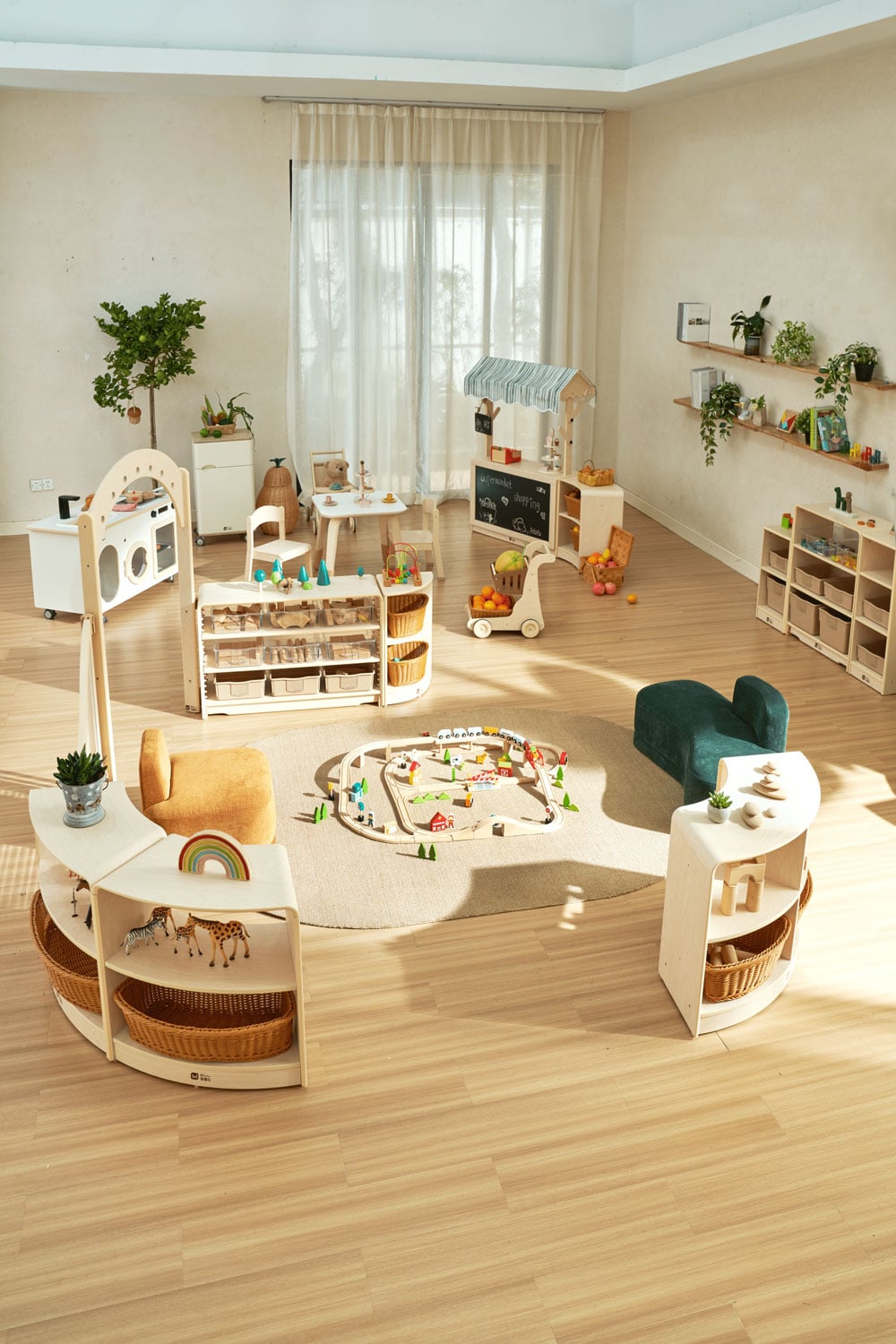
The consequences of poor furniture choices extend far beyond initial disappointment. Incorrectly sized tables force children into awkward postures that hinder fine motor skill development, unsafe storage units create tipping hazards that put toddlers at risk, and non-durable pieces require frequent replacement that strains already tight budgets. Meanwhile, furniture that fails to adapt to multiple age groups limits your facility's flexibility as enrollment demographics shift. This comprehensive guide examines the five most prevalent mistakes daycare operators make when furnishing their facilities and provides actionable strategies to avoid each pitfall, ensuring your investment in daycare furniture delivers maximum value in safety, functionality, and longevity.
Ignoring Age-Appropriate Sizing Standards
The Critical Impact of Improper Furniture Dimensions
One of the most fundamental yet frequently overlooked mistakes in daycare furniture selection involves choosing pieces that do not match the developmental stages and physical dimensions of the children who will use them. When tables are too high, young children cannot maintain proper posture during activities, leading to fatigue and reduced engagement in learning tasks. Chairs that are too large prevent feet from resting flat on the floor, compromising stability and creating safety concerns during mealtimes and classroom activities. These seemingly minor discrepancies accumulate throughout the day, affecting everything from fine motor skill development during art projects to social interaction during group activities. Properly sized daycare furniture enables children to sit comfortably with feet flat, knees bent at ninety degrees, and work surfaces at elbow height, creating the ergonomic foundation necessary for focused learning and healthy physical development.
Implementing Multi-Age Furniture Strategies
The challenge intensifies in mixed-age classrooms where infants, toddlers, and preschoolers share space, requiring daycare furniture solutions that accommodate diverse physical needs without creating a chaotic mismatched environment. Rather than purchasing entirely separate furniture sets for each age group, which proves cost-prohibitive for most facilities, savvy daycare operators invest in adjustable-height tables and chairs that grow with children or can serve multiple age groups over time. Another effective approach involves creating distinct learning zones within the classroom, each furnished with appropriately sized pieces for specific age ranges. Infants require low platforms and cushioned floor seating that support their limited mobility, while toddlers need slightly elevated surfaces that encourage standing and cruising activities. Preschoolers benefit from standard-height tables and chairs that prepare them for elementary school environments. When selecting Daycare Furniture, always reference age-specific sizing charts from reputable manufacturers and measure existing children in your program to ensure optimal fit across your enrollment demographics.
Avoiding Common Measurement Pitfalls
Many daycare operators make the mistake of relying solely on manufacturer age recommendations without verifying actual dimensions against their specific population. Children develop at different rates, and regional variations in average height can make standard sizing guidelines inadequate for your particular facility. Always measure seat height, table height, and the relationship between the two rather than simply ordering based on labeled age ranges. The ideal chair height allows children to sit with feet flat on the floor while maintaining a ninety-degree angle at the knees. Table height should position the work surface approximately two inches above the seated elbow height, enabling comfortable arm positioning without shoulder strain. These precise measurements ensure your daycare furniture investment supports rather than hinders child development, creating an environment where physical comfort enables cognitive and social growth.
Compromising Safety for Aesthetic Appeal
Understanding Essential Safety Certifications
The second critical mistake involves prioritizing visual appeal over safety compliance when selecting daycare furniture, a decision that can have devastating consequences. While attractive, modern designs certainly enhance the learning environment and appeal to prospective parents during facility tours, these aesthetic considerations must never override fundamental safety requirements. All daycare furniture should meet or exceed ASTM International standards for children's furniture, CPSC guidelines for product safety, and any additional state or local licensing requirements specific to your jurisdiction. Look for furniture with GREENGUARD certification to ensure low chemical emissions, rounded corners to prevent impact injuries, and stable bases that resist tipping even when children climb or pull on pieces. Non-toxic finishes are non-negotiable, as young children frequently mouth furniture surfaces during exploration. Furniture stability testing should demonstrate resistance to forward tipping when maximum recommended weight is placed on extended drawers or when children attempt to climb shelving units.
Identifying Hidden Safety Hazards
Beyond obvious dangers like sharp edges and unstable construction, several subtle safety issues frequently escape notice during initial daycare furniture evaluation. Small gaps between components can create finger pinch points when drawers close or when hinged elements move, causing injuries that are both painful and potentially serious. Hardware such as screws, bolts, and connectors should be fully recessed or covered to prevent catching clothing or scratching skin during normal use. Furniture with glass elements, even tempered glass, poses unnecessary risk in environments where physical play and occasional collisions are inevitable. Heavy pieces like bookcases and storage cabinets require wall anchoring systems to prevent tip-over accidents, which remain a leading cause of furniture-related injuries among young children. When evaluating potential daycare furniture purchases, physically inspect samples if possible, testing stability, checking for sharp edges, and examining all moving parts for pinch point risks before committing to large orders.
Balancing Design with Child Safety Protocols
Creating visually appealing learning environments does not require sacrificing safety standards, but it does demand careful selection from manufacturers who understand early childhood needs. Modern daycare furniture designers increasingly offer options that combine child-safe construction with contemporary aesthetics, using bright colors, interesting shapes, and engaging textures within safety-compliant frameworks. Soft-close drawer mechanisms prevent finger injuries while maintaining clean lines, rounded corners on tables and chairs eliminate sharp edges without compromising style, and low-profile designs reduce tipping hazards while creating open, inviting spaces. Rather than viewing safety and aesthetics as opposing priorities, approach daycare furniture selection with the understanding that the best designs integrate both seamlessly, creating environments that are simultaneously beautiful and secure.
Selecting Non-Durable Materials and Construction
Understanding the True Cost of Low-Quality Furniture
The third major mistake involves choosing daycare furniture based primarily on initial purchase price without considering long-term durability and total cost of ownership. While budget constraints are real for most early childhood programs, selecting inexpensive furniture constructed from particleboard, plastic composites, or thin veneers inevitably leads to premature failure and frequent replacement costs that far exceed the initial savings. Young children are inherently hard on furniture, subjecting pieces to constant use, occasional misuse, and the wear patterns that come from serving twenty to thirty children daily rather than a single family. Furniture that performs adequately in residential settings often fails within months in commercial daycare environments where usage intensity is exponentially higher. Quality daycare furniture constructed from solid wood, commercial-grade laminates, and reinforced joinery will serve your facility for ten to fifteen years or longer, amortizing the higher initial investment across thousands of child-days and delivering substantially lower per-year costs than cheap alternatives requiring replacement every two to three years.
Identifying Construction Quality Indicators
Assessing daycare furniture durability requires understanding key construction elements that separate commercial-grade pieces from residential or economy options. Joint construction methods reveal much about longevity potential, with mortise-and-tenon or dowel joints providing far superior strength compared to simple butt joints held only by screws or staples. Table and chair legs should be solid hardwood rather than hollow or composite materials, with sufficient thickness to withstand the lateral stresses children apply during scooting and repositioning. Drawer boxes constructed with dovetail joinery and mounted on full-extension ball-bearing slides will outlast stapled boxes on plastic roller tracks by many years. Surface finishes should specify commercial-grade durability with resistance to common daycare challenges including water, cleaning chemicals, paint, markers, and the acidic properties of spilled food and beverages. When evaluating potential purchases, request detailed specifications rather than relying on marketing descriptions, and seek furniture backed by commercial warranties of at least five years, indicating manufacturer confidence in long-term performance.
Maintaining Furniture to Maximize Lifespan
Even the highest quality daycare furniture requires proper maintenance to achieve its full lifespan potential, yet many facilities neglect this aspect until visible damage demands attention. Establishing regular inspection protocols identifies minor issues like loose screws, worn glides, or finish damage before they escalate into safety hazards or require complete replacement. Quarterly inspections should check all hardware for tightness, examine joints for loosening, assess surface finishes for deterioration, and verify stability of each piece. Immediate attention to small repairs prevents minor problems from compounding, extending furniture life significantly. Proper cleaning practices also affect longevity, as harsh chemicals can damage finishes while excessive water exposure can compromise wood components. Training staff on appropriate cleaning methods for different daycare furniture materials ensures that daily maintenance enhances rather than undermines your investment. Creating a furniture maintenance schedule and assigning responsibility for inspections and repairs demonstrates the commitment to quality that distinguishes exceptional facilities from merely adequate ones.
Failing to Plan for Flexibility and Adaptability
The Limitations of Fixed Furniture Arrangements
The fourth significant mistake involves purchasing daycare furniture designed for single-purpose use or fixed arrangements that cannot adapt to evolving program needs, changing enrollment patterns, or varied learning activities throughout the day. Modern early childhood education emphasizes diverse teaching approaches including large group instruction, small group collaboration, individual exploration, and dramatic play scenarios, each requiring different spatial configurations. Furniture that cannot be easily rearranged limits pedagogical flexibility, forcing educators to work around physical constraints rather than creating optimal learning environments for each activity. Heavy, immobile pieces or built-in furniture systems might provide initial storage efficiency but ultimately restrict the dynamic space use that characterizes high-quality early childhood programs. The most effective daycare furniture combines stability during use with mobility for reconfiguration, featuring locking casters, modular components, and lightweight construction that allows teachers to transform classroom layouts quickly in response to curriculum needs.
Implementing Modular Furniture Systems
Modular daycare furniture systems offer exceptional versatility by combining standardized components that can be arranged in countless configurations to serve different functions throughout the day and across program years. A set of identical cube storage units might form a room divider during morning centers, separate into individual student supply stations during afternoon work time, and combine into a dramatic play kitchen during free choice periods. Nesting tables conserve space when not in use while providing flexible surface area that expands and contracts with group size. Lightweight chairs stack efficiently for storage during gross motor activities, then deploy quickly when seating is needed. When selecting modular systems, ensure all components maintain consistent aesthetic appeal and construction quality, so various configurations appear intentional rather than haphazard. The initial investment in modular daycare furniture typically exceeds fixed alternatives, but the long-term value of adaptability becomes apparent as programs evolve, enrollment demographics shift, and educational philosophies develop without requiring complete furniture replacement.
Anticipating Future Program Evolution
Strategic daycare furniture planning looks beyond current needs to anticipate how your program might evolve over three to five years, ensuring purchases made today remain relevant as circumstances change. Facilities planning to add infant care should invest in convertible furniture that serves toddlers now but can adapt to younger children later, avoiding the need for complete replacement when program expansion occurs. Programs considering curriculum changes, such as implementing Montessori or Reggio Emilia approaches, should select furniture compatible with these philosophies rather than pieces so specific to current methods that pedagogical evolution requires starting over. Even uncertain future changes warrant flexible furniture choices, as adaptability provides insurance against the unexpected. The most resilient daycare furniture investments feature timeless designs rather than trendy aesthetics, neutral color palettes that coordinate with evolving room decor, and construction quality that outlasts multiple program iterations.
Overlooking Storage and Organization Integration
The Hidden Crisis of Inadequate Storage
The fifth critical mistake, often unrecognized until operations begin, involves failing to integrate sufficient storage into daycare furniture planning, creating chronic clutter that undermines both program quality and regulatory compliance. Early childhood classrooms require storage for curriculum materials, art supplies, manipulatives, books, dramatic play props, extra clothing, first aid supplies, cleaning materials, and countless other items necessary for daily operations. When furniture selection prioritizes tables, chairs, and activity areas while treating storage as an afterthought, classrooms quickly become chaotic environments where teachers cannot locate needed materials, children face constant distraction from visual clutter, and licensing inspectors identify organization deficiencies. Effective storage solutions should be integrated into the initial daycare furniture plan rather than added reactively, with dedicated spaces for every category of classroom materials and child belongings. The generally accepted guideline suggests that storage furniture should comprise approximately thirty to forty percent of total classroom furniture to support organized, efficient operations.
Designing Child-Accessible Storage Systems
Beyond sheer storage volume, daycare furniture must facilitate child independence by making appropriate materials accessible while keeping hazardous items secure. Low, open shelving allows children to select and return manipulatives and toys independently, fostering decision-making skills and personal responsibility while reducing constant adult intervention. Clear containers and pictorial labeling systems help even pre-readers understand where materials belong, supporting organizational skills and classroom community. However, not all storage should be child-accessible, as cleaning supplies, teacher materials, and certain specialized equipment require secured storage that only adults can access. The most functional daycare furniture plans incorporate both open child-height storage and secured adult-height cabinets, often within the same units to maximize space efficiency. Cubbies and personal storage spaces give each child a designated area for belongings, reducing lost items and creating a sense of ownership within the classroom environment.
Maximizing Space Efficiency Through Strategic Storage
In facilities where square footage is limited, strategic storage integration within daycare furniture becomes essential for maintaining functional learning environments without sacrificing activity space. Multi-functional furniture pieces that combine primary purposes with storage capacity deliver exceptional value in constrained spaces. Bench seating with interior storage provides both group seating and toy storage, window seats with lift-up lids create reading nooks above supply storage, and hollow block collections double as room dividers and construction materials. Vertical storage maximizes wall space, drawing children's attention upward and creating visual interest while preserving precious floor area for movement and play. Corner units make use of often-wasted space, and furniture mounted to walls eliminates floor footprints entirely while maintaining accessibility. When space constraints are significant, every piece of daycare furniture should justify its footprint by serving multiple functions or providing exceptional storage capacity relative to the floor area it occupies.
FAQ
What is the most important safety feature to look for in daycare furniture?
The most critical safety feature in daycare furniture is stability and tip-over resistance, particularly for tall pieces like bookcases and storage units. Furniture should have a wide, heavy base and include wall-anchoring hardware to prevent tipping accidents even when children climb or pull on shelving. Additionally, all edges should be rounded rather than sharp, and finishes must be non-toxic and free from harmful chemicals, verified through certifications such as GREENGUARD. Always ensure any daycare furniture you purchase meets ASTM and CPSC safety standards specific to commercial early childhood environments.
How can I determine the right furniture size for mixed-age classrooms?
For mixed-age classrooms, the most effective approach involves creating distinct learning zones furnished with age-appropriate pieces rather than trying to find one-size-fits-all solutions. Measure the children currently enrolled and reference manufacturer sizing charts to select furniture where seat height allows feet to rest flat on the floor and table height positions work surfaces about two inches above seated elbow height. Consider investing in adjustable-height tables and chairs that can accommodate multiple age groups or grow with children over time. When space and budget allow, having several furniture sizes available gives you flexibility to group children appropriately for different activities while ensuring each child has access to properly sized daycare furniture throughout the day.
Is expensive commercial-grade furniture really worth the investment for a small daycare?
Yes, commercial-grade daycare furniture represents a superior investment even for small facilities when you calculate total cost of ownership rather than focusing solely on initial purchase price. Quality furniture constructed from solid wood or commercial-grade materials with reinforced joinery typically lasts ten to fifteen years in daily use, while economy furniture often requires replacement within two to three years. A commercial table costing three hundred dollars that serves your facility for twelve years costs only twenty-five dollars per year, whereas a residential-quality table at one hundred dollars that must be replaced every two years actually costs fifty dollars annually. Beyond cost considerations, durable furniture maintains its appearance and safety features throughout its lifespan, whereas deteriorating budget pieces create poor impressions for prospective families and may pose safety risks as they age.
How often should daycare furniture be inspected and maintained?
Daycare furniture should undergo quarterly formal inspections where staff systematically examine each piece for loose hardware, structural integrity, surface damage, and stability issues. During these inspections, tighten all screws and bolts, check that wall anchors remain secure, assess finishes for deterioration, and test that moving parts like drawers and doors operate smoothly without creating pinch points. Beyond scheduled inspections, train all staff to report any furniture concerns immediately so minor issues can be addressed before they become safety hazards or require complete replacement. Daily informal observation during regular cleaning and room setup should identify obvious problems, while the quarterly deep inspection catches issues that develop gradually. Maintaining detailed records of inspections and repairs helps demonstrate regulatory compliance and informs future purchasing decisions by revealing which daycare furniture performs best in your specific environment.
