
As caregivers spend countless hours supporting children's development, their physical comfort and safety often take a backseat to the primary focus on child welfare. However, the reality is that caregivers require thoughtfully designed childcare furniture that accommodates adult ergonomic needs while facilitating effective child supervision and interaction. The caregiver's perspective on childcare furniture emphasizes the critical importance of adult comfort, proper body mechanics, and injury prevention in professional and home childcare environments.
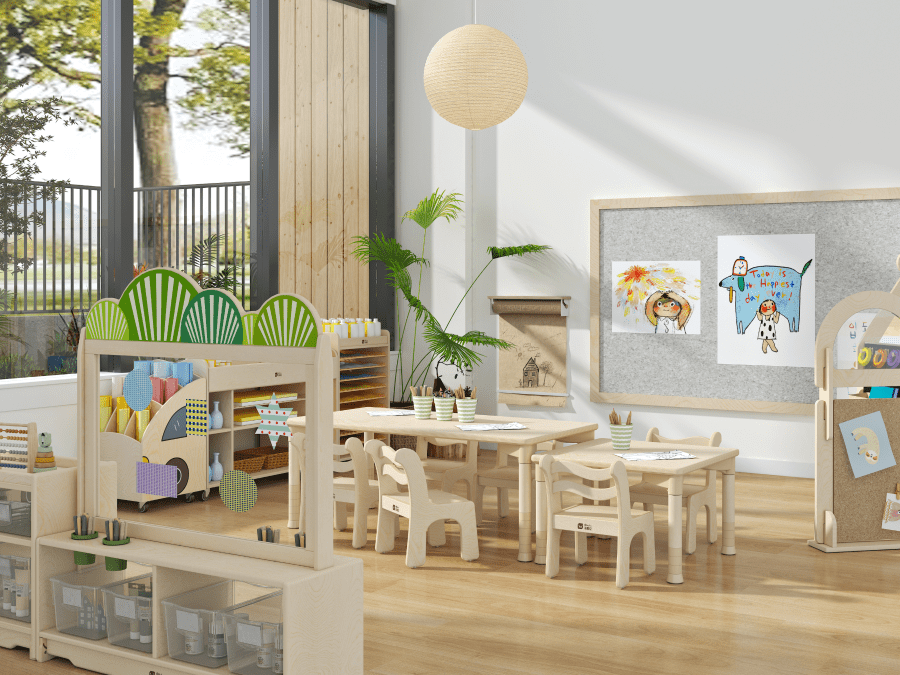
Ergonomic childcare furniture represents a paradigm shift from traditional child-only design considerations to a dual-purpose approach that serves both child development needs and caregiver wellness. This comprehensive perspective recognizes that sustainable childcare delivery depends on maintaining caregiver health and preventing the musculoskeletal disorders that commonly affect childcare professionals. When childcare furniture supports proper adult posture and reduces physical strain, caregivers can maintain higher energy levels, experience less fatigue, and provide more consistent, attentive care throughout their workday.
Understanding Caregiver Physical Demands in Childcare Settings
Common Physical Stressors for Childcare Professionals
Childcare professionals face unique physical challenges that traditional furniture often fails to address. Extended periods of sitting on child-sized chairs create significant lower back compression, hip flexor tightness, and poor spinal alignment. Many caregivers experience chronic knee pain from prolonged floor sitting during circle time and reading activities. The constant bending, lifting, and reaching required for child interaction places tremendous strain on the lumbar spine, shoulders, and neck when childcare furniture lacks proper height adjustments and support features.
Research indicates that childcare workers report musculoskeletal disorders at rates exceeding many other professions, with lower back pain affecting over 60% of practitioners. The repetitive nature of childcare tasks, combined with furniture designed exclusively for child proportions, creates a perfect storm for caregiver injury and discomfort. Ergonomic childcare furniture addresses these challenges by providing adult-appropriate seating heights, lumbar support, and adjustable features that adapt to various caregiving activities throughout the day.
Impact of Poor Furniture Design on Caregiver Performance
When childcare furniture fails to support caregiver ergonomics, the negative effects extend far beyond physical discomfort. Caregivers experiencing back pain, neck strain, or leg numbness struggle to maintain the patience, energy, and emotional availability that high-quality childcare demands. Poor posture from inadequate childcare furniture can lead to fatigue, decreased concentration, and reduced interaction quality with children. The resulting physical stress often translates to increased sick leave, higher staff turnover, and compromised childcare program consistency.
Uncomfortable seating positions force caregivers to frequently shift, stand, or take breaks, disrupting the flow of educational activities and reducing supervision effectiveness. Children notice when their caregivers appear uncomfortable or distracted, which can impact the sense of security and trust essential to healthy child development. Ergonomic childcare furniture eliminates these disruptions by enabling caregivers to maintain comfortable, stable positions that support sustained, focused interaction with children.
Essential Ergonomic Features in Adult-Friendly Childcare Furniture
Height Adjustability and Multi-Level Support
The cornerstone of ergonomic childcare furniture lies in height adjustability that accommodates both adult comfort and child accessibility. Adjustable-height tables allow caregivers to maintain proper arm positioning while enabling children to work comfortably at their level. Chair systems with multiple height settings ensure that adults can achieve proper hip and knee alignment while remaining at an appropriate level for child interaction. This flexibility in childcare furniture design prevents the compromised postures that result from static, child-only sizing.
Advanced childcare furniture incorporates hydraulic or pneumatic adjustment mechanisms that enable quick, easy transitions between different activity configurations. During art projects, the furniture can accommodate adult supervision at standing height, while story time may require lowered positions that maintain caregiver lumbar support. The ability to modify furniture height throughout the day reduces repetitive strain and allows caregivers to vary their working positions, promoting better circulation and muscle activation.
Lumbar Support and Postural Alignment
Proper lumbar support in childcare furniture is non-negotiable for preventing lower back disorders among caregivers. Ergonomic chairs feature contoured backrests that maintain the natural S-curve of the spine, even when caregivers lean forward to assist children. The lumbar support should be adjustable both in height and depth to accommodate different body types and preferences. Quality childcare furniture incorporates memory foam or adaptive materials that provide consistent support throughout extended sitting periods.
Beyond basic lumbar support, ergonomic childcare furniture considers the full spinal alignment chain. Headrests reduce neck strain during activities requiring upward gaze, while armrests positioned at proper elbow height prevent shoulder elevation and upper trapezius tension. The seat depth and angle work together to promote healthy hip positioning and prevent slouching. These integrated support systems ensure that caregivers can maintain optimal posture regardless of the specific childcare activity or duration.
Safety Considerations for Adult Users in Childcare Environments
Stability and Weight Distribution
Safety in childcare furniture extends beyond child protection to encompass adult user stability and injury prevention. Ergonomic childcare furniture must support adult weight loads while maintaining stability during dynamic movements such as reaching, lifting, or responding to child needs. Wide base designs and low centers of gravity prevent tip-over incidents when caregivers shift weight or lean to assist children. Anti-slip feet and floor anchoring systems provide additional stability assurance in active childcare environments.
Weight distribution considerations become particularly important in childcare furniture designed for dual adult-child use. Tables and chairs must accommodate the combined loads and dynamic forces generated by both user groups without compromising structural integrity. Quality childcare furniture undergoes rigorous testing to verify stability under worst-case loading scenarios, ensuring that normal caregiver movements cannot create hazardous situations. The safety margin built into professional childcare furniture provides peace of mind for both individual caregivers and institutional administrators.
Edge Design and Impact Protection
While rounded edges in childcare furniture primarily protect children from injury, they also benefit caregivers who frequently move around and interact with furniture in close quarters. Soft-edge designs reduce the severity of impacts when caregivers accidentally contact furniture corners during rapid responses to child needs. Strategic padding placement on high-contact areas provides additional protection without compromising furniture functionality or aesthetics. These safety features become especially important in crowded childcare environments where movement space is limited.
Impact-resistant materials in childcare furniture construction protect both users and the furniture itself from damage during normal use. High-density foam cores and resilient surface materials withstand the repeated impacts and stresses common in active childcare settings. This durability ensures that safety features remain effective throughout the furniture's service life, maintaining protection for caregivers and children alike. The investment in impact-resistant childcare furniture pays dividends in reduced injury rates and lower replacement costs.
Creating Caregiver-Centered Childcare Environments
Workflow Optimization Through Furniture Placement
Strategic arrangement of ergonomic childcare furniture creates efficient workflows that minimize caregiver movement and reduce physical stress. Furniture positioning should enable caregivers to supervise multiple areas while maintaining comfortable seated or standing positions. Mobile childcare furniture elements allow for quick reconfiguration to support different activities while preserving caregiver sight lines and accessibility. The goal is creating an environment where childcare furniture supports natural movement patterns rather than forcing awkward positions or excessive reaching.
Effective childcare furniture layouts consider the frequency and type of caregiver movements throughout typical daily routines. High-use items should be positioned within easy reach of primary caregiver stations, while less frequent materials can occupy secondary locations. The furniture arrangement should facilitate smooth transitions between activities without requiring caregivers to assume compromised postures or make repetitive movements that contribute to injury risk. This systematic approach to childcare furniture placement enhances both caregiver comfort and operational efficiency.
Technology Integration and Adaptive Features
Modern childcare furniture increasingly incorporates technological features that enhance caregiver comfort and functionality. Built-in device charging stations, adjustable lighting, and storage solutions reduce the need for caregivers to leave their positions or assume awkward postures to access necessary tools. Smart childcare furniture may include posture monitoring systems that alert caregivers when they've maintained potentially harmful positions for extended periods, promoting awareness of ergonomic best practices.
Adaptive features in childcare furniture extend beyond basic adjustability to include memory settings that automatically return to preferred configurations for different caregivers or activities. Climate control elements such as ventilated seating and temperature-responsive materials enhance comfort during extended use periods. These technological enhancements in childcare furniture demonstrate the evolution toward truly caregiver-centered design that prioritizes adult wellness alongside child development needs.
FAQ
What makes childcare furniture ergonomic for adult caregivers?
Ergonomic childcare furniture incorporates height adjustability, lumbar support, proper seat depth and angle, and stability features designed to accommodate adult body proportions and movement patterns. Key elements include adjustable-height tables and chairs, contoured backrests that maintain spinal alignment, armrests positioned at appropriate elbow height, and anti-tip stability systems. The furniture must support adult weight loads while enabling comfortable positioning for extended periods of child interaction and supervision.
How does ergonomic childcare furniture improve caregiver performance?
Comfortable, well-designed childcare furniture reduces physical strain and fatigue, allowing caregivers to maintain higher energy levels and emotional availability throughout their workday. When caregivers aren't distracted by discomfort or pain, they can focus more effectively on child development activities and maintain consistent supervision quality. Ergonomic childcare furniture also reduces sick leave and turnover rates by preventing the musculoskeletal disorders commonly associated with poorly designed childcare environments.
What safety features should caregivers look for in childcare furniture?
Essential safety features in childcare furniture include wide, stable bases to prevent tipping, anti-slip feet for secure positioning, rounded edges to minimize impact injuries, and weight ratings that exceed expected loads. Look for furniture with secure locking mechanisms on adjustable components, impact-resistant construction materials, and smooth surfaces that won't snag clothing or skin. Professional-grade childcare furniture should meet or exceed industry safety standards for both adult and child users.
Can ergonomic childcare furniture accommodate different body types and sizes?
Quality ergonomic childcare furniture features extensive adjustability ranges that accommodate various adult body types and sizes. Height-adjustable components typically offer 6-8 inches of range, while lumbar support systems can be positioned to fit different torso lengths. Seat depth adjustments accommodate different leg lengths, and armrest positioning adapts to various arm and shoulder proportions. The best childcare furniture includes user-friendly adjustment mechanisms that allow quick customization for different caregivers throughout the day.
