
In the last decade, the landscape of childhood has undergone a quiet but seismic shift. As digital interfaces become smoother and screen time becomes ubiquitous, the physical world available to our children is shrinking. At Hikeylove, we spend a lot of time analyzing this trajectory, and we believe the antidote to a high-tech world isn't no technology—it’s high-touch experiences.
As we engage with pediatric therapists, educators, and modern parents, a common theme emerges: We don't just need new toys; we need a new philosophy of play.
We are moving away from the era of "Passive Entertainment"—where a battery-operated toy performs for a sedentary child—toward the era of "Active Construction." This is where Hikeylove stands, at the intersection of rigorous developmental science and beautiful, sustainable design.
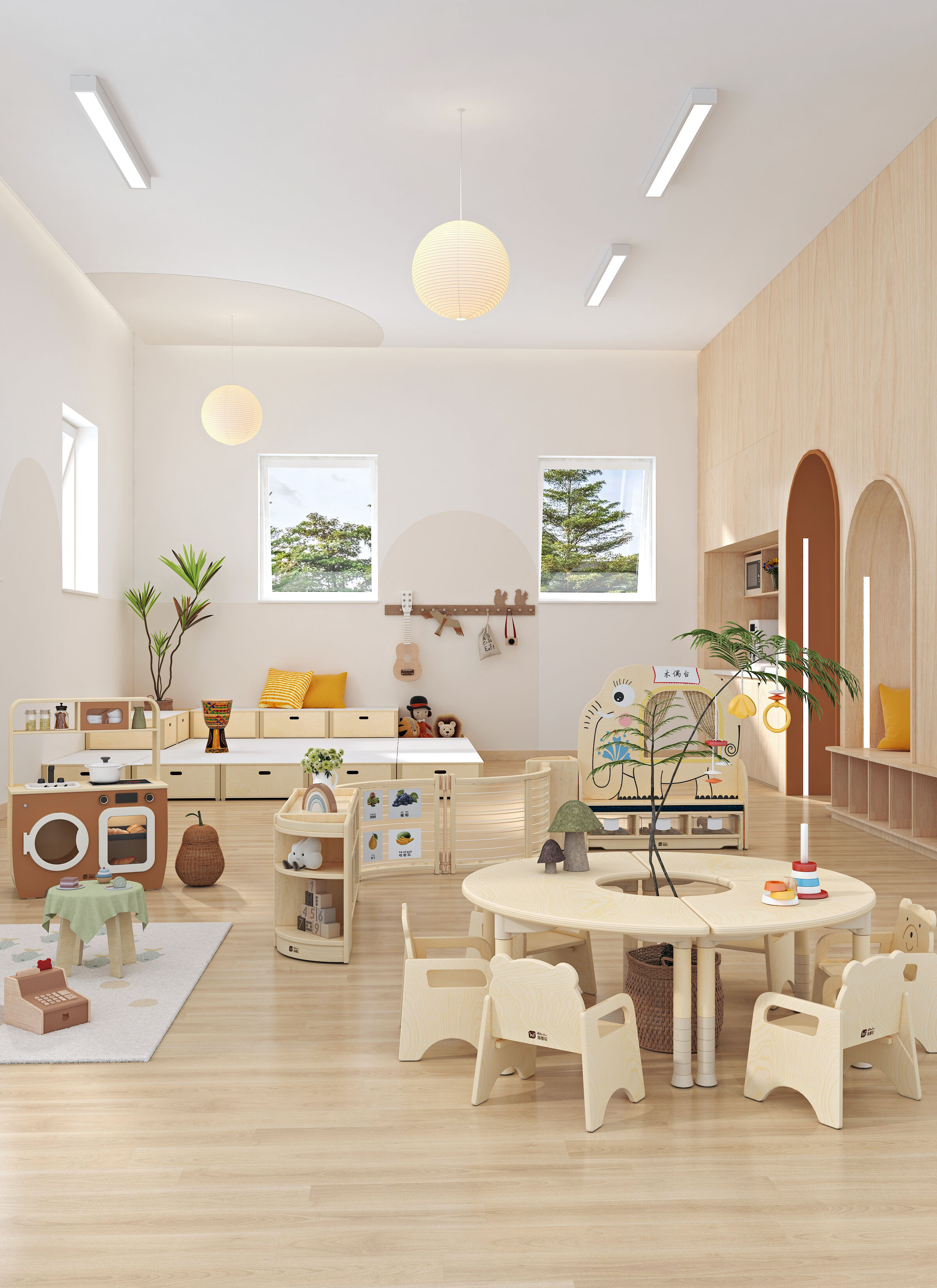
One of the most compelling insights in modern occupational therapy is the connection between physical risk and emotional resilience. It sounds counterintuitive: to keep children safe, we must let them take risks.
When a child approaches a Hikeylove climbing triangle or navigates the arch of a wooden bridge, they are not just exercising muscles; they are exercising judgment. This process engages the Vestibular System (balance and spatial orientation) and Proprioception (body awareness).
If you walk into a standard playroom, you often hear the word "No." “No, don’t jump on the couch.” “No, don’t climb the bookshelf.”
At Hikeylove, we are deeply inspired by the Emmi Pikler and Montessori philosophies, which advocate for the "Yes" Environment. This is a space curated so that the child is free to explore independently without constant adult intervention.
To achieve this, the environment must be:
Our products are the architecture of this "Yes" Environment. A balance beam isn't just a piece of wood; it is a tool for autonomy. When a toddler crosses it without holding a hand, they are proving to themselves, "I am capable." That internal monologue is the foundation of all future learning.
For a long time, the toy industry operated on the assumption that children only respond to neon colors and flashing lights. However, recent market analysis and child psychology suggest the opposite. Over-stimulating environments can lead to fragmented attention spans and increased cortisol (stress) levels.
We treat the aesthetics of our products as a form of "Visual Nutrition."
By utilizing natural woods, smooth finishes, and neutral palettes, Hikeylove products respect the child’s need for calm. Furthermore, this approach respects the parent’s home. We believe that you shouldn't have to choose between a home that looks sophisticated and a home that is fun for your kids.
The shift is undeniable: The modern parent is acting as an interior designer, looking for pieces that harmonize with their living space. By merging functionality with furniture-grade craftsmanship, we are elevating the standard of what a "toy" should look like.
In a world dominated by fast fashion and disposable plastics, Hikeylove advocates for the "Slow Toy" Movement.
From an industry perspective, we are seeing a consumer pivot away from quantity and toward quality. Parents are realizing that buying ten cheap plastic toys that break or are forgotten in a week is less economical than investing in one high-quality wooden structure that lasts for five years.
Consider the lifecycle of a Hikeylove Climbing Arch:
This is Lifecycle Design. It is sustainable not just for the planet (using renewable wood sources), but for the family budget. It teaches children to value and care for their belongings, fostering a mindset of stewardship rather than consumption.
At Hikeylove, we don’t view ourselves merely as manufacturers. We are partners in your parenting journey.
We know that raising a child in the 2020s is complex. You are navigating screen time debates, educational pressures, and a changing world. Our goal is to make the physical aspect of parenting easier. We provide the tools that allow you to step back and drink your coffee while your child engages in deep, meaningful, independent play.
We invite you to look at your home not just as a living space, but as a landscape of potential. By choosing tools that prioritize movement, beauty, and independence, you are building a foundation that will support your child long after they have outgrown the playroom.
Welcome to the new standard of play. Welcome to Hikeylove.

Leading Chinese brand for 20+ years, supplying eco-safe, design-driven kindergarten furniture & turnkey space solutions to 10,000+ preschools worldwide.
No. 26 Gongye Avenue, Shunjing Industrial Park, Banfu Town, Zhongshan City, Guangdong Province
Copyright © 2026 Zhongshan Haijilun Cultural And Educational Product Co., Ltd.. All rights reserved. Privacy Policy