
The landscape of early childhood education is evolving, and the environments we create for young learners are transforming with it. Today's kindergarten furniture is no longer just about tables and chairs; it's about intelligent, responsive ecosystems that actively support development, well-being, and pedagogical goals. At Hikeylove, we stay ahead of the curve by integrating these key design trends into our core philosophy.
The fusion of thoughtful design and ergonomic science is paramount. The focus is on creating furniture that adapts to the child, not the other way around.
Height-Adjustable Solutions: The demand for easily adjustable tables and chairs continues to grow. These pieces allow a single classroom to cater to diverse physical sizes within an age group and adapt seamlessly as children grow, representing a smart, long-term investment.
Design for Movement: Modern ergonomics understands that children learn through motion. Furniture is increasingly designed to support dynamic sitting, flexible postures, and active learning, integrating subtle movement options that enhance focus and physical development.
Transparency and responsibility in material selection are non-negotiable for today's educators and parents. The trend is moving decisively towards total environmental stewardship.
Beyond Non-Toxic: The standard is now proven sustainability. This means prioritizing rapidly renewable resources, materials with high recycled content, and finishes with ultra-low or zero VOCs (Volatile Organic Compounds).
Circular Design Principles: Forward-thinking design considers the entire product lifecycle. We focus on durability to ensure longevity, use materials that can be responsibly recycled, and design for disassembly, minimizing our environmental footprint from production to end-of-life.
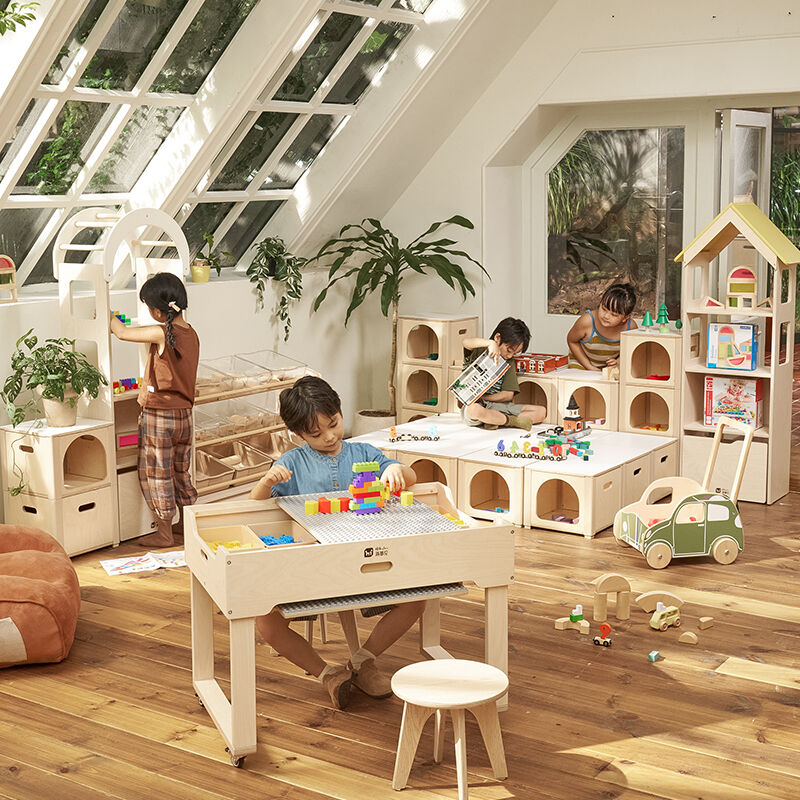
Furniture is evolving from standalone objects into integrated components of a learning environment.
Flexible & Zoned Spaces: The "one-size-fits-all" classroom is obsolete. Furniture systems are now modular and reconfigurable, enabling educators to quickly create distinct zones for quiet reading, collaborative art, sensory play, or individual focus within a single room.
Supporting Social-Emotional Learning (SEL): Design explicitly addresses emotional well-being. Dedicated, cozy calm corners or retreat nooks with soft forms and tactile materials provide essential spaces for self-regulation, reflecting a deep understanding of children's emotional needs.
Empowering Autonomy: Furniture design encourages independence. Open, accessible storage at child height and self-service material systems (like integrated art supply troughs) allow children to manage their resources, fostering responsibility and decision-making skills.
These trends highlight a collective shift towards environments that are more adaptive, responsible, and deeply supportive of the whole child. At Hikeylove, we don't just follow these trends—we embed them into every product, crafting furniture that is ready for the future of learning.
Ready to see how these trends come to life in your space?
Explore our future-forward collections designed with intention.
[Browse Our Trending Collections] | [Contact Our Design Team]

Leading Chinese brand for 20+ years, supplying eco-safe, design-driven kindergarten furniture & turnkey space solutions to 10,000+ preschools worldwide.
No. 26 Gongye Avenue, Shunjing Industrial Park, Banfu Town, Zhongshan City, Guangdong Province
Copyright © 2026 Zhongshan Haijilun Cultural And Educational Product Co., Ltd.. All rights reserved. Privacy Policy