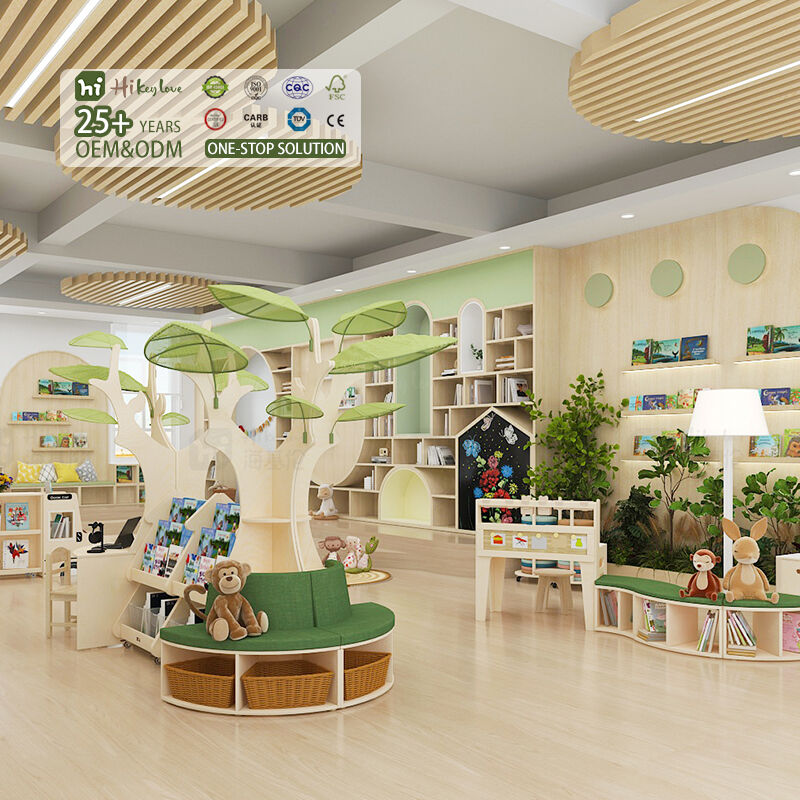
For over a century, Montessori education has redefined how we nurture young children aged 3 to 6. Rooted in respect for every child’s unique developmental pace, natural curiosity and innate desire to learn, this educational philosophy has evolved from a niche teaching method into a global benchmark for high-quality early childhood education. Today, as the early education industry shifts away from teacher-led rote learning toward child-centered, experiential growth, more preschools are embracing authentic Montessori practices. However, many educators and school owners soon realize that Montessori is far more than a set of teaching materials or classroom decorations. Its success heavily relies on a well-crafted prepared environment—the so-called “third teacher” that guides, inspires and empowers children every single day.
As a trusted manufacturer specializing in Montessori-aligned
preschool furniture with 20 years of industry experience, Hikeylove has dedicated itself to translating Montessori’s timeless philosophy into tangible, functional classroom spaces. In this article, we will explore the core of Montessori preschool philosophy, discuss prevailing industry challenges, and share how thoughtful furniture and space design can help preschools fully implement Montessori principles, build superior learning environments and gain competitive advantages in the early education sector.
The Core Tenets That Define Montessori Preschool Philosophy
Maria Montessori’s educational theories are built on simple yet powerful beliefs about children, and these principles serve as the foundation for every standard Montessori classroom. Unlike traditional preschools that prioritize collective discipline and knowledge delivery, Montessori puts the child at the center of all arrangements and activities.
First and foremost is respect for the child as an independent individual. Montessori observed that young children possess an “absorbent mind”, capable of learning constantly from their surroundings. They are not passive recipients of instructions but active explorers who want to make choices and solve problems on their own. A true Montessori classroom never forces children to follow uniform schedules or activities. Instead, it grants them freedom to select learning zones, materials and playmates, within clear and gentle boundaries. This freedom within limits cultivates self-discipline, confidence and a strong sense of responsibility from an early age.
The second pillar is the prepared environment, the most distinctive feature of Montessori education. Every corner, piece of furniture and learning material in the classroom is intentionally designed to match children’s physical height, cognitive level and developmental needs. Classrooms are divided into dedicated functional zones: practical life area, sensory area, math area, language & reading corner, art creation zone and rest area. All furniture and supplies are placed at children’s eye level and reachable height, allowing kids to access, use and tidy up items independently. Order and simplicity are highly valued here. Cluttered spaces, over-bright colors and overly fancy decorations are avoided, as they distract children and break the peaceful learning atmosphere. Natural textures, soft tones and neat layouts help children stay focused and develop good organizational habits.
Third, Montessori advocates learning through hands-on experience. Young children learn best by touching, operating and experimenting, rather than listening to lectures. Every functional zone in a Montessori preschool is equipped with tools that encourage hands-on exploration. Whether it is sorting books in the reading corner, creating artwork in the art zone or practicing daily life skills, every activity is designed to engage children’s senses and motor skills. In addition, mixed-age grouping is widely adopted in Montessori preschools. Older children learn to care for and guide younger peers, while younger ones learn by observation. This creates a warm, collaborative community and fosters essential social skills.
Common Industry Pain Points in Montessori Implementation
While Montessori education has become a major trend worldwide, many preschools struggle to practice its core ideas in real operation, largely due to mismatched space and furniture design.
A large number of institutions only copy Montessori superficially. They purchase standard Montessori teaching aids but keep traditional fixed desks and rigid layouts. Tall cabinets, adult-sized furniture and scattered storage make it impossible for children to take and put away materials independently, completely violating the “child-led” spirit of Montessori. Some classrooms overuse bright colors and complicated ornaments, creating a noisy environment that makes it hard for kids to concentrate.
Another widespread problem is single-functional space design. Many generic preschool furniture only meets basic storage or seating needs, without considering the diverse learning goals of Montessori functional zones. A reading corner may lack comfortable seating and classified book storage; an art zone cannot combine creation, display and storage efficiently. Moreover, low-quality materials and sharp edges bring hidden safety risks. For preschools running high-frequency daily activities, flimsy furniture also means frequent replacement and higher long-term costs.
These issues create a gap between educational philosophy and actual classroom use. Even with well-trained teachers, a poorly designed space will hold back the effect of Montessori education, failing to unlock children’s potential and limiting the overall brand strength of the preschool.
Hikeylove: Turning Montessori Philosophy into Practical Classroom Solutions
At Hikeylove, we understand that furniture is not just decoration—it is the carrier of educational philosophy. For two decades, our R&D and design teams have worked closely with Montessori educators to develop a full line of preschool furniture and overall space planning solutions that align 100% with Montessori standards. Every product we make starts from children’s developmental needs and Montessori’s core concepts.
We strictly follow ergonomic standards for 3-6 year-old children. Our low open-style shelves for reading corners and functional zones are designed at child-friendly heights, enabling little ones to retrieve and organize books and supplies without adult help. All tables, chairs and cabinets adopt full rounded edge treatment. Combined with FSC-certified solid wood and non-toxic water-based paint, our products meet international CE and ASTM safety standards, delivering a safe, eco-friendly learning environment that parents and educators can fully trust.
To fit the zoning layout of Montessori classrooms, our core products adopt a modular combination structure. Preschools can freely assemble and adjust different modules according to classroom size, zone division and teaching themes. When teachers need to reorganize activity spaces, the mobile design with silent casters allows quick rearrangement, perfectly supporting the flexible teaching mode of Montessori. Our multi-functional zone furniture integrates storage, display and operation functions. For example, the art corner combines drawing boards, material storage and work display; the reading corner matches open book shelves and cozy seating areas, maximizing the value of limited classroom space.
Beyond single products, Hikeylove provides one-stop overall Montessori classroom planning services. From zone division and furniture matching to color collocation and style design, our professional team creates calm, orderly and natural-style classroom atmospheres that conform to Montessori aesthetics. We also support OEM and ODM customization to satisfy the personalized demands of different preschools, kindergartens and early education centers across the globe.
Our 70,000-square-meter production base, strict quality control system and stable global logistics ensure reliable bulk supply and on-time delivery. Up to now, our Montessori-style preschool furniture has been exported to dozens of countries and regions, winning consistent praise from educators, school operators and distributors. We do not merely sell furniture; we partner with early education professionals to help every preschool truly implement authentic Montessori education.
Final Thoughts
Montessori preschool education thrives when philosophy, educators and environment work in harmony. A well-designed prepared environment can amplify the value of teaching, guide children to grow independently, and build a distinctive educational brand for preschools. As the global early education industry continues to pursue high-quality and standardized development, investing in professional, Montessori-aligned classroom furniture and space design has become a wise choice for forward-thinking education practitioners.
Hikeylove will keep adhering to the essence of Montessori education, continuously optimizing products and solutions, and standing firmly as a reliable industry leader. Whether you are furnishing a new Montessori preschool, upgrading existing classroom facilities, or seeking long-term cooperative suppliers, we are ready to provide you with professional advice, customized plans and premium products.
Let us work together to create warm, safe and inspiring Montessori learning spaces, and accompany every child to explore, grow and embrace a bright future.
#MontessoriPreschool #EarlyChildhoodEducation #PreschoolFurniture #ClassroomDesign #Hikeylove #ChildCenteredLearning