
As early education continues to evolve, the physical environment of kindergartens and preschools is no longer a neutral backdrop—it has become an active participant in children’s emotional, cognitive, and social development. The 2026 early childhood classroom design trends reflect a clear shift toward spaces that heal, adapt, educate, and protect health, redefining what high-quality learning environments truly mean.
Below, we explore four key trends shaping the future of early childhood classroom furniture and spatial design.
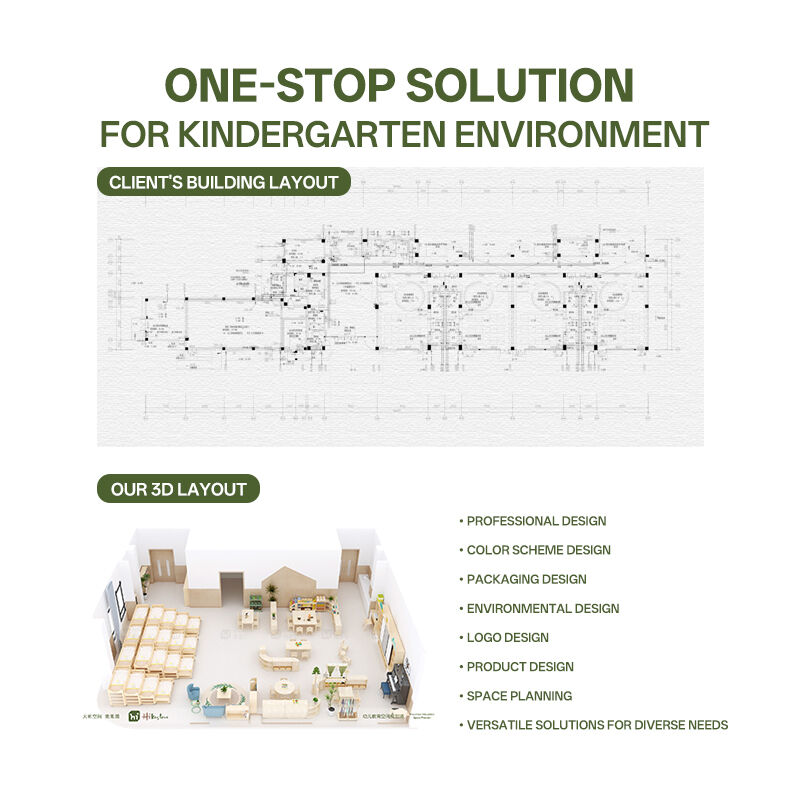
The era of overly colorful, visually noisy classrooms is giving way to environments that promote calm, focus, and emotional well-being. Modern early childhood classroom design trends emphasize healing aesthetics that support children’s nervous systems and daily rhythms.
Key Design Strategies:
Extensive use of soft, organic curves, not only for safety but to reduce visual tension and create restorative atmospheres
A move toward warm neutral palettes, earth tones, and natural wood finishes
Strategic use of darker woods (such as walnut or smoked finishes) in selected areas to introduce depth, stability, and premium texture
These “breathing” spaces help children feel grounded and secure, while also elevating the overall design language for forward-thinking early education brands.
Classrooms must now support project-based learning, group collaboration, quiet focus, and movement—all within the same space. Flexibility has become a structural requirement rather than an add-on.
Key Design Strategies:
Tool-free modular systems using magnetic or snap-fit connections, allowing teachers to reconfigure layouts quickly and independently
Furniture that functions like LEGO blocks—easy to assemble, disassemble, and recombine
Practical smart features, such as:
Furniture with integrated sensors to track activity patterns
Simple interactive lighting that responds to use or learning scenarios
This “smart skeleton” enables classrooms to evolve throughout the day, aligning spatial design with modern teaching methodologies.
Sustainability is no longer just about meeting regulations. In 2026, it becomes a core expression of a brand’s responsibility, innovation, and long-term vision.
Key Design Strategies:
Adoption of bio-based materials such as bamboo fiber boards and mycelium foam
Advanced antibacterial and anti-allergen surface treatments becoming standard in high-end early childhood furniture
Material choices that actively support indoor air quality and children’s health
These innovations mark a shift from passive safety to proactive health protection, a defining element of next-generation early learning environments.
In leading early education models, furniture is no longer just functional—it becomes a physical expression of pedagogy.
Key Design Strategies:
Montessori-aligned furniture that strictly follows child-scale proportions and supports independent access and autonomy
Reggio Emilia-inspired designs that encourage exploration, documentation, and reflection, positioning the environment as the “third teacher”
Furniture that subtly guides behavior, learning flow, and interaction—without verbal instruction
This approach transforms classrooms into immersive learning landscapes where values, methods, and outcomes are embedded into every object.
The early childhood classroom design trends of 2026 reflect a deeper understanding of how space, furniture, and materials shape learning experiences. Healing aesthetics, flexible systems, healthy materials, and pedagogically driven design are no longer optional—they are the new foundation of high-quality early education environments.
For brands, schools, and designers, the future belongs to those who see classroom furniture not as products, but as tools for growth, care, and inspiration.

Leading Chinese brand for 20+ years, supplying eco-safe, design-driven kindergarten furniture & turnkey space solutions to 10,000+ preschools worldwide.
No. 26 Gongye Avenue, Shunjing Industrial Park, Banfu Town, Zhongshan City, Guangdong Province
Copyright © 2026 Zhongshan Haijilun Cultural And Educational Product Co., Ltd.. All rights reserved. Privacy Policy